Not Your Daddy’s Muscadet! 

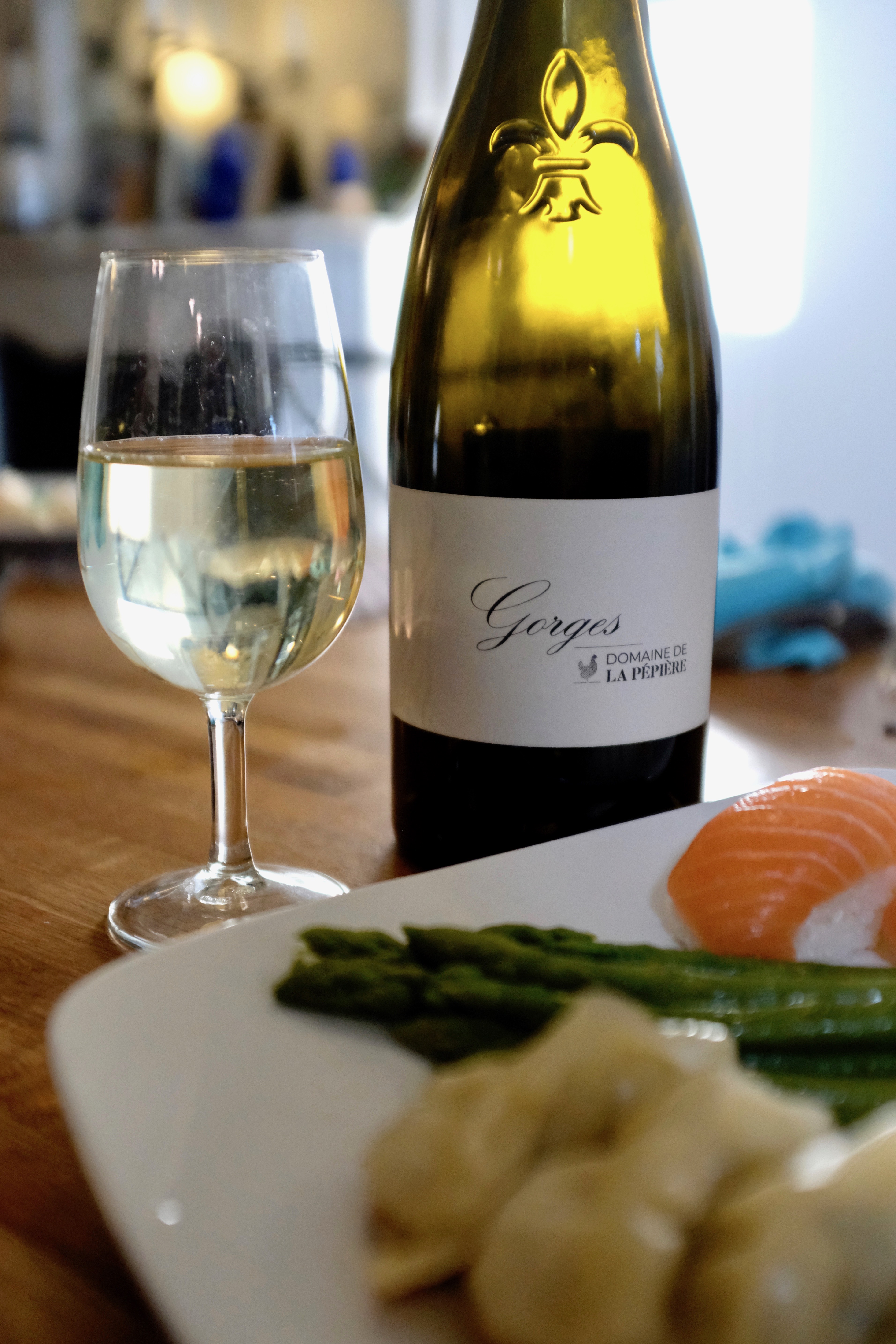
I recently had the pleasure of re-tasting one of the wines that blew my mind last year (and in so doing, completely changed my conception of the much-maligned Muscadet): the delicious cuvée ‘Gorges’ from Domaine de la Pépière, a biodynamically farmed estate in the perennially underrated Loire valley sub-region of Muscadet, just off the Atlantic coast. Fermented spontaneously with native yeasts, and aged on its lees in underground, glass-lined cement tanks for more than 3 years before bottling… At once chiselled and sappy, bristling with tension and minerality, boasting lovely floral, citrus and flinty aromas, and an endless saline finish, this is an exemplar of the new style of wines coming out of Muscadet today, wines sommelier David Biraud (Thierry Marx / Mandarin Oriental, Paris ) so elegantly describes as jus de cailloux – stone juice. 
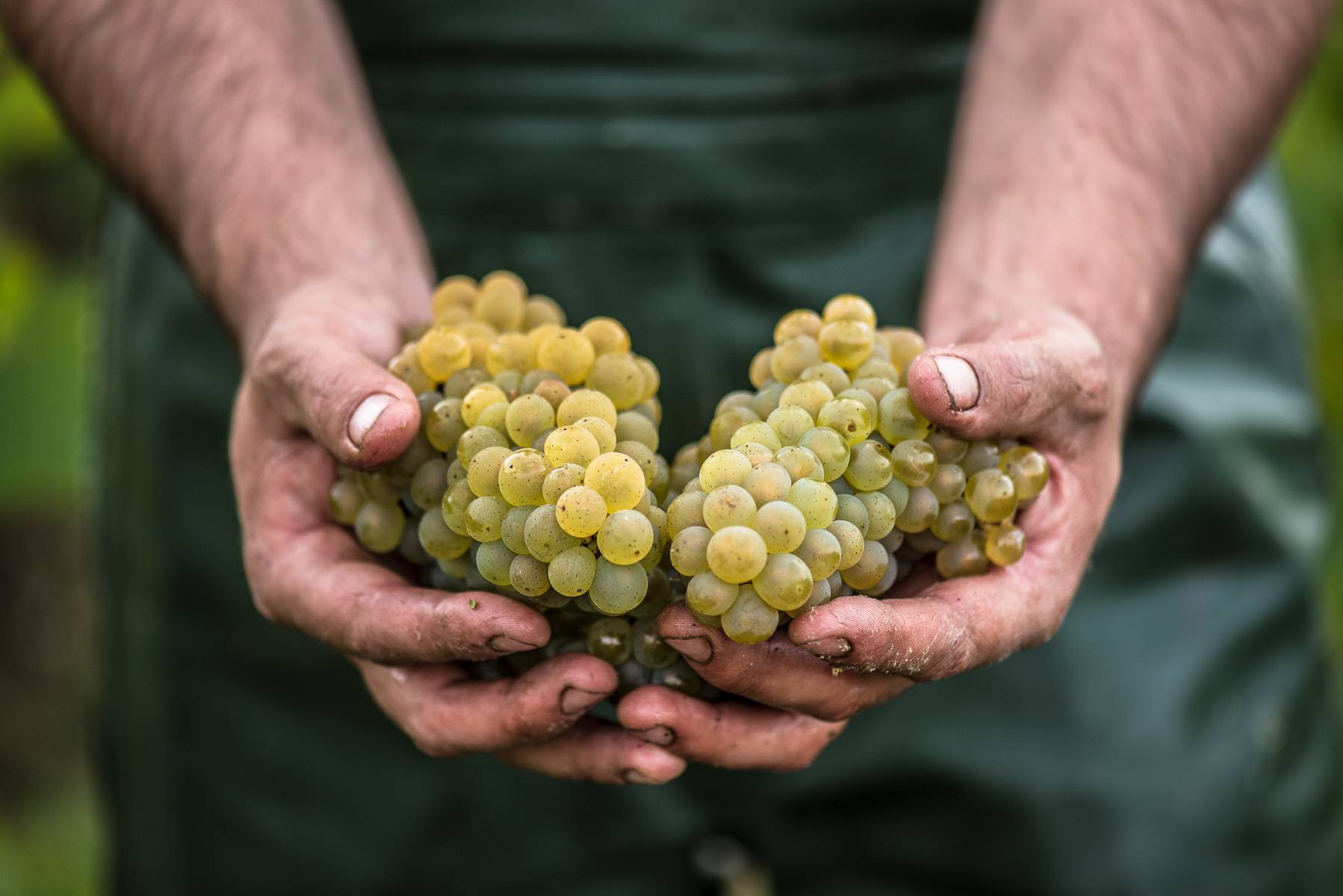
Melon de Bourgogne – the long underappreciated grape behind Muscadet – is proving today to have a remarkable capacity to translate terroir ©EmelineBoileau

Gorges is the name of the first Muscadet Cru, created in 1998 to distinguish the wines from a commune with a distinctive soil type (today there are 10, from Cru Clisson, whose granite terroir yields rich, textured wines, to Cru Goulaine, whose terroir of gneiss and mica-schist makes elegant, opulent wines). The wines from the Cru Gorges are part of a vanguard over the last 20 years of a different breed of Muscadet created as expressions of distinctive terroirs, and which includes both the new Cru wines but also many other bottlings from sensitive winemakers with exquisite soils (from Domaine de l’Ecu’s “Orthogneiss” to Domaines Landron’s “Amphibolite”, respectively named after the igneous or metamorphic stone found in a specific vineyard). 

The geology of Gorges is special, boasting deep soils of clay and quartz pebbles over a homogenous subsoil of gabbro – rocks from the oceanic crust of eons past, formed by the slow cooling of magnesium-rich and iron-rich magma. What is the subsoil of the vineyard that gives Jérome Bretaudeau of Domaine de Bellevue his cuvée Gaia, considered by many to be one of the greatest Muscadets created today? Gabbro. These volcanic wines of Muscadet’s gabbro terroirs are among the firmest, most structured and most intensely mineral of all – especially when made using biodynamic viticulture and meticulous, low-interventionist winemaking like of Domaine de la Pepière. These are white wines for ageing: this 2019 is just starting to open up, ideally you should open this after 5 or 10 years if you really want to knock your socks off.
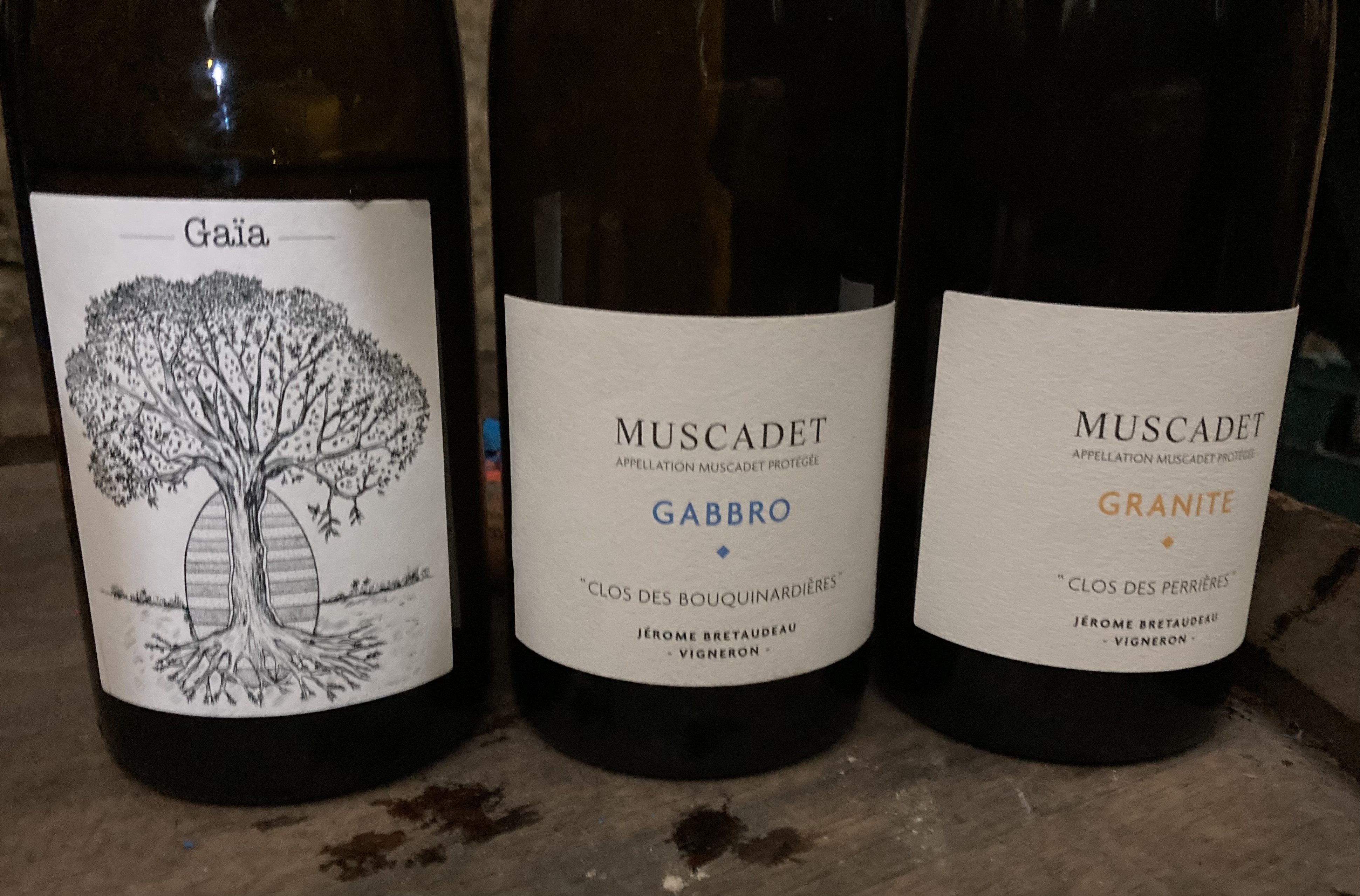
A few of Jérome Bretaudeau’s fabulous single vineyard Muscadets, during a tasting at La Dive Bouteille wine festival in the Loire Valley

Back in the early 1990s, before the Cru Gorges was created, at a time when too many producers in Muscadet were prioritizing quantity over quality, the winemaker Jo Landron of Domaines Landron charted a new path for the region. Landron was among the first winemakers in the region to abandon chemicals in the vineyard and the cellar, and to develop a range of cuvées to highlight the different soil and bedrock types found in his estate’s various plots, from those with a subsoil of the metamorphic rock Amphibolite, to the sandstone over clay terroirs of his Fief du Breil plot, to his Clos la Carizière plots made up of orthogneiss and quartz rocks. The quality and distinctiveness of these single-vineyard bottlings, all made with the same grape – Melon de Bourgogne – was so undeniable, that even the world of fine dining in Paris (which by the 2000s had all but banned Muscadet for its menus) had to take notice.

Landron’s flagship cuvée is undoubtedly Amphibolite – named for a type of rock produced through the metamorphism of gabbro. A palate of juicy citrus fruit, at once fresh and rich, with a lovely backbone of oceanic minerality… this is just good wine, easy-drinking, forget the off-the-charts acidity we’ve long associated with Muscadet. 
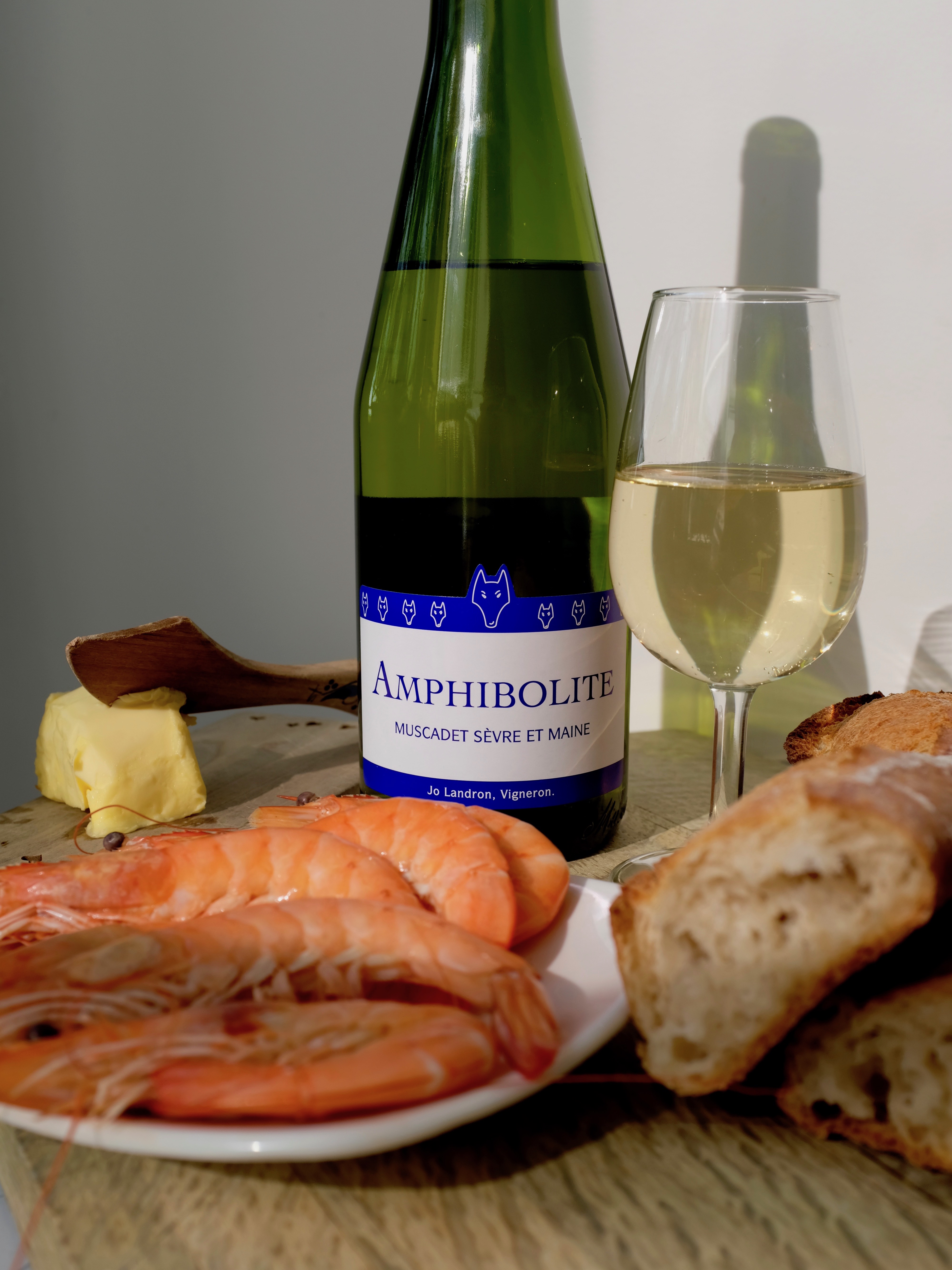
When David Biraud, the 2002 best sommelier of France, landed his first head sommelier position in 2000 at Hotel Crillon’s Les Ambassadeurs, there wasn’t a single Muscadet on the wine list. Biraud changed that, by introducing the clientele of this famous palace hotel to Jo Landron’s Amphibolite. Today, as director of Sur Mesure par Thierry Marx, his winelist includes Amphibolite and 22 other Muscadets. As he told me during an interview,  “Finally, Muscadet is showing everyone that it’s a wine region of great geological complexity – and that Melon, this understated, remarkably transparent grape, is perfectly adapted to transcribing terroir into minerality.”

To learn more about the renaissance of Muscadet, you can check out my article below from this winter in Centurion Magazine – “Muscadet Awakening“: 

© Jeffrey T Iverson, 2024. Unauthorized use and/or duplication of this material without express and written permission from this blog’s author and/or owner is strictly prohibited. Excerpts and links may be used, provided that full and clear credit is given to Jeffrey T Iverson with appropriate and specific direction to the original content.
Courage in a Bottle

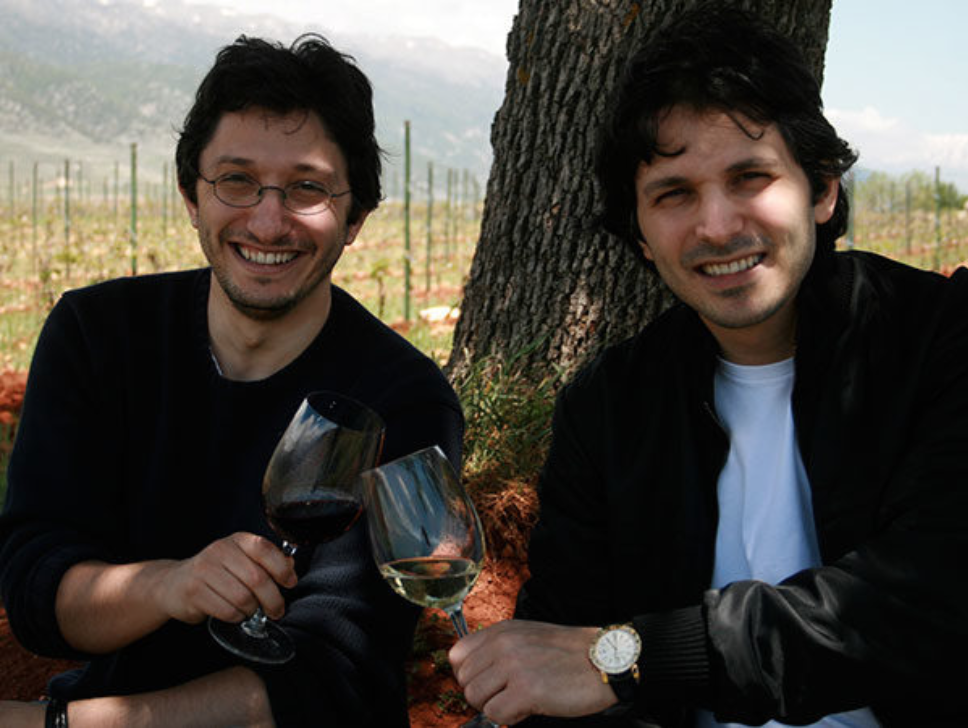
Karim and Sandro Saadé, founders of the Syrian wine estate Domaine de Bargylus

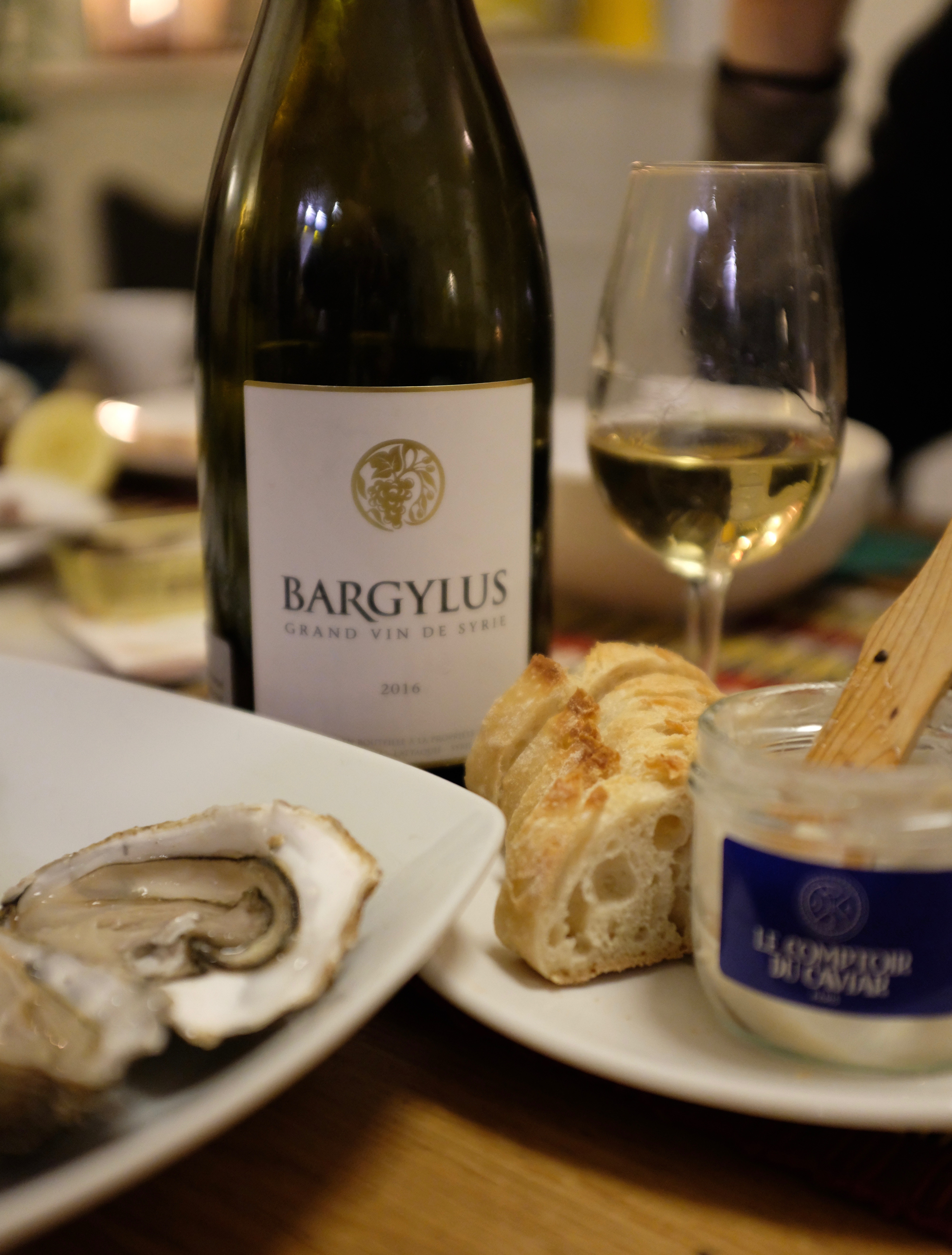
Like many of you, I was saddened by the reports of the series of earthquakes that struck Turkey and Syria during the month of February. Today, many people in these countries have yet to finish clearing away the wreckage, let alone begin to rebuild. As a lover of great wines and winemakers, the tragedy also made me think of the Saadé family, whose pioneering estate Domaine de Bargylus is the only commercial winery in Syria. Having dedicated more than one article to the Saadés over the years, I’ve developed a deep respect for this family of exceptional winemakers and exceptional survivors. Making a wine of even middling quality in one of the most volatile regions in the world would be an admirable feat, but the Saadés are making what critics Jancis Robinson and Hugh Johnson have called “the finest wine produced in the Eastern Mediterranean”. Every year since 2003 – even after the Syrian war broke out – brothers Karim and Sandro Saadé and their diverse, multi-ethnic, multi-religious team have patiently, passionately produced a vintage at their Syrian wine estate Domaine de Bargylus, while also managing another celebrated estate across the border in Lebanon – Château Marsyas. Now, they’re once again preparing a new vintage while navigating dire straits, something they’ve had to do far too often over the last two decades. As Karim put it in a recent email, “With everything we have been going through the last few years in our middle eastern region, it seems we are reliving the seven plagues of Egypt!”

I first met Karim and Sandro in 2012 at a tasting of their wines in Paris at Caves Legrand, the legendary wine merchant situated in the city’s beautiful Galerie Vivienne shopping arcade. I was impressed with the pair, not just because they spoke French like native speakers, but because the wines were so good – not sun-baked and jammy as I might have expected, but full of freshness and complexity.

In my first article about the Saadés for Syria Deeply, the groundbreaking single issue news website founded in 2012 to cover the Syrian conflict, I wrote, “Karim and Sandro Saadé weren’t born into wine, but if the marks of a good winegrower are the ability to adapt and take in stride the vicissitudes of life and nature, then the Saadés have already proven themselves beyond a doubt to be a pair of natural vignerons.” 

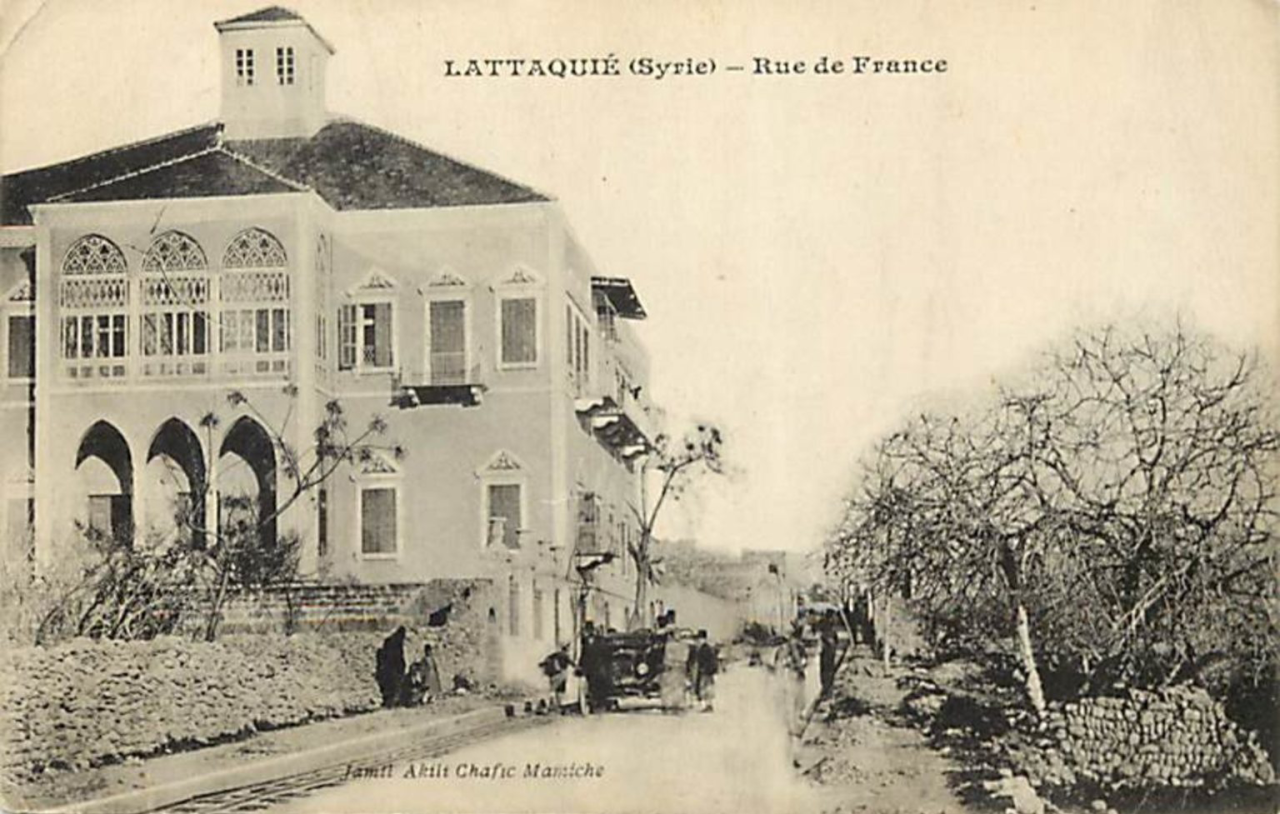
By the time the first shells had landed in their plot of Chardonnay vines, it would have seemed normal for Karim and Sandro to abandon the project. And yet they’ve persevered, drawing inspiration from history and their own family story. The Greek Orthodox Christian ancestors of their Lebanese-Syrian family hailed from the ancient Syrian port city of Laodicea (today Lattakia). Karim and Sandro’s influential ancestors include their great-great grandfather Elias Saadé who revolutionized olive tree cultivation in Syria, but a wave of nationalizations in the early 1960s during the country’s political union with Egypt saw the Saadés lose all their land and factories. Which is in part why the brothers have carried on so tenaciously in this ambitious project to revive a Syrian vineyard on the outskirts of Lattakia. As Sandro puts it, “Bargylus is the land of our origins.”

Yet Bargylus is also a wine that reconnects us with the origins of wine itself. As I wrote in Syria Deeply, “the estate is situated at the heart of the region that gave birth to viticulture. The 20-hectare vineyard is planted at the foot of Jebel Al-Ansariyé, cited as ‘Mount Bargylus’ by Pliny the Elder, and whose slopes were once-covered by vine and olive trees. Wine produced there left the ports of Ougarit and Laodicea to be exported to Egypt, Greece and Rome. So vast was once the production that most of the wine consumed in Alexandria was grown on Mount Bargylus—a history all but forgotten but for a few ancient fermentation tanks dug out of the limestone rock left by the Romans.”

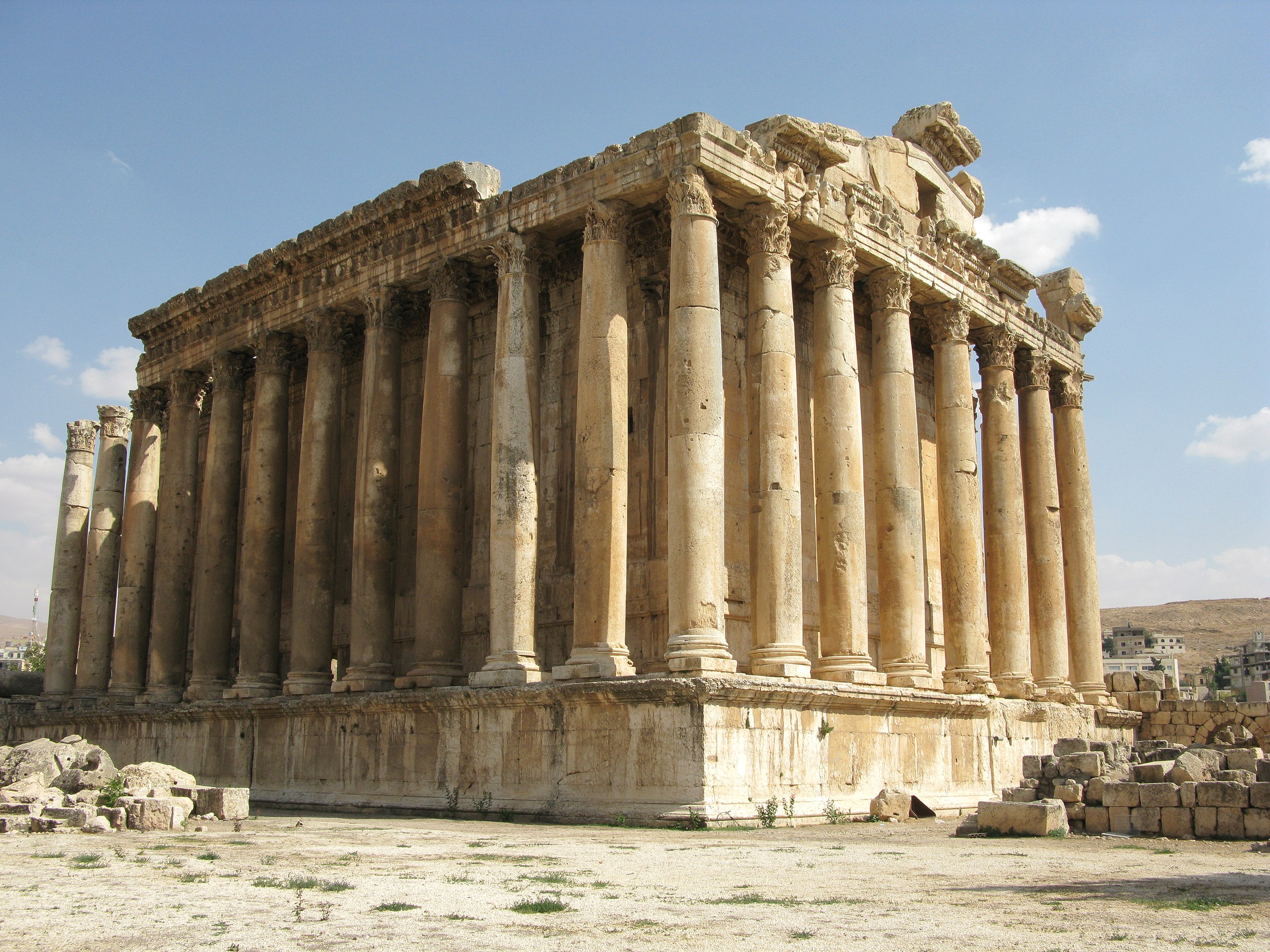
The Temple of Bacchus is one of the best preserved and grandest Roman temple ruins in the world. 150 AD to 250 AD. Heliopolis, Baalbek, Beqaa Valley, Lebanon. © Vyacheslav Argenberg

The links to ancient history are even more visible in Lebanon, whose Bekaa Valley, where the Saadés planted their Château Marsyas estate, was chosen by the Romans as the site of their greatest temple to Bacchus, god of wine, which still stands today. Like the wines of Syria, the wines grown in this soil once enjoyed renown of biblical proportions. (“Israel’s fame will be like the wine of Lebanon,” Hosea 14:7)

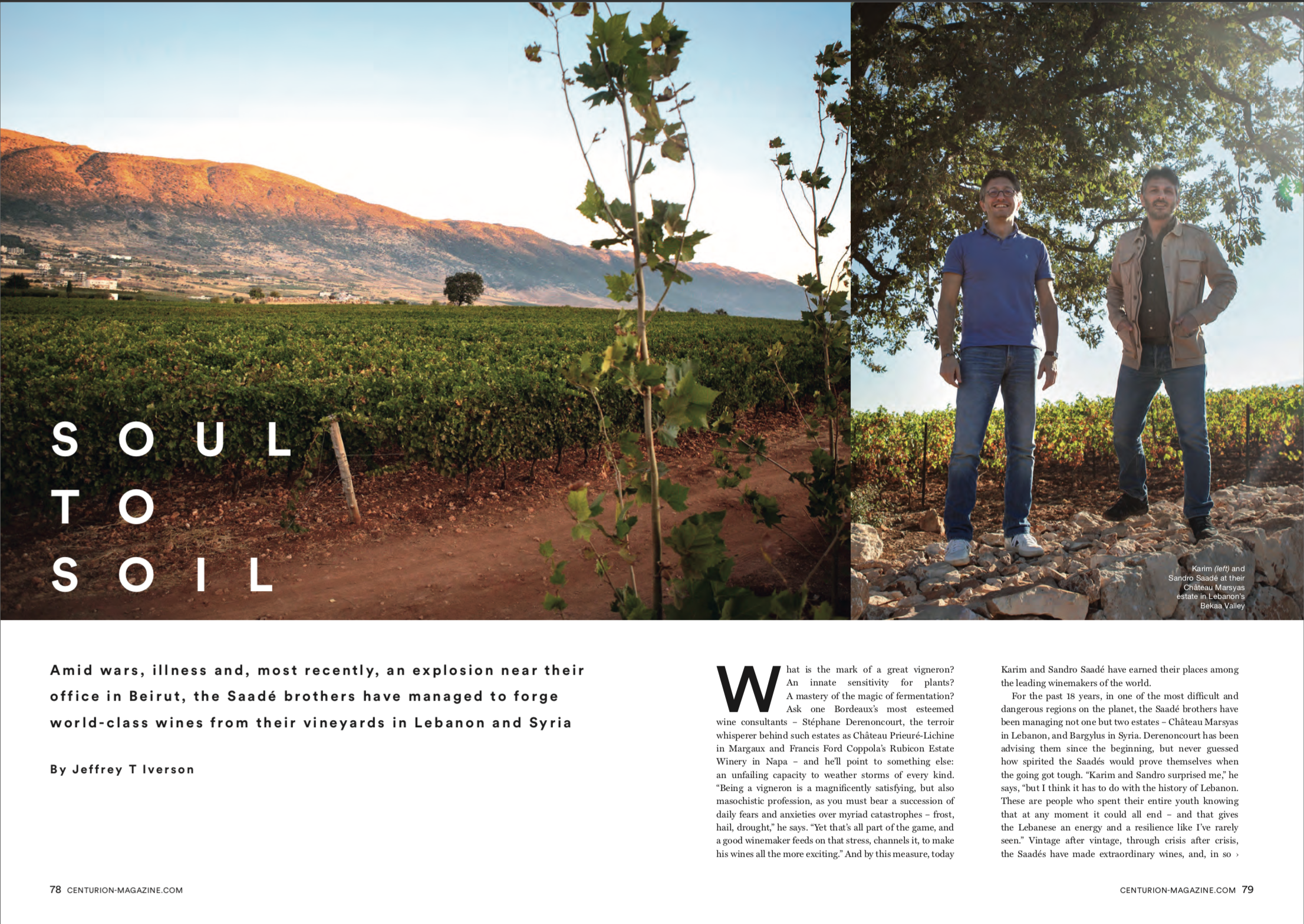
Since the beginning of the Syrian War, Karim and Sandro have had to manage the logistics of the day-to-day at Domaine de Bargylus from the relative safety of their offices in Beirut, using taxis to bring samples of grapes from Syria into Lebanon to be tested before harvest. It was just before harvest in August 2020, while the country was already grappling with the COVID pandemic, that a huge reserve of ammonium nitrate being stored at the Port of Beirut exploded. As it turns out, the Saadés’ Beirut offices overlook the port, and were devastated by the blast, leaving Sandro and his father hospitalized. That year, the Saadé brothers’ would manage the harvest from their father’s hospital room. The event spurred me to reach out to the Saadés for a new interview, and the chance learn more about the Eastern Mediterranean wine renaissance they’re working so hard to bring about. This led to an article published in Centurion Magazine in Spring of 2021 entitled “Soul to Soil”.


Naturally, when I learned of the earthquake in Syria and Turkey last month, my thoughts went out to the Saadés. To have to face an earthquake now on top of everything else seems almost ridiculously unjust! After Lattakia was struck on February 20th by the second large earthquake, Karim emailed me an update.

—————————————–

Dear Jeffrey,

Many thanks for your heartfelt message. I deeply appreciate it. 

 …Our staff has reported that many buildings in the city have collapsed. I am still waiting for additional information.

The previous earthquake of February 6th of a magnitude of over 7 also had deadly and destructive repercussions in the Syrian cities of Latakia, Idlib and Aleppo.

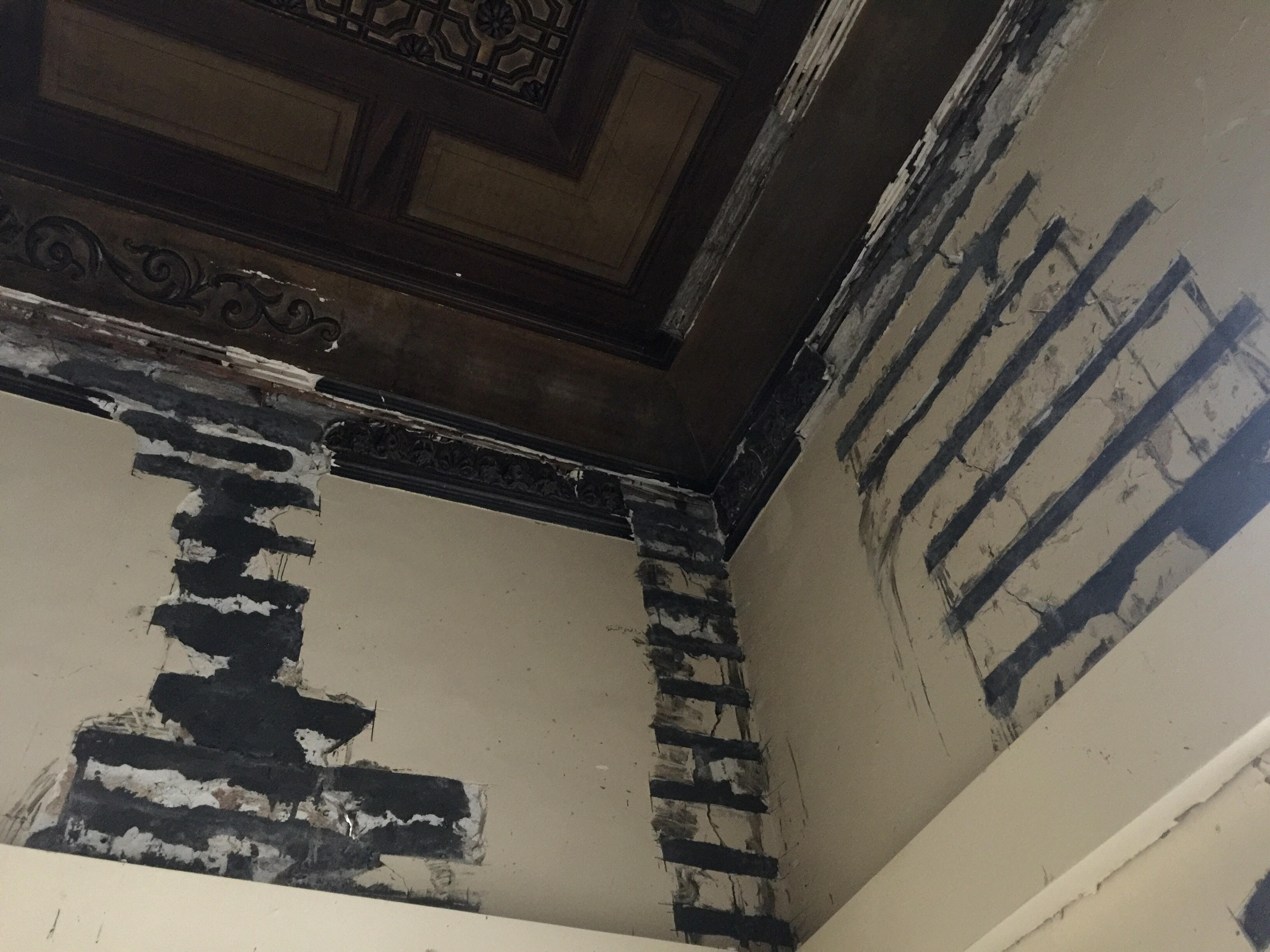
The family’s historical mansion of Venetian-ottoman style has been damaged while dozens of buildings have collapsed in the city of Latakia. More importantly, more than a thousand casualties have been reported.

Built around 150 years ago by my great grand-father Gabriel Saadé, it is a listed building, part of which is allocated to Domaine de Bargylus’s offices.

Although relatively minor earthquakes kept on happening for more than twenty days now, we started the consolidation and rehabilitation process. 

The “clipping” process has been implemented to insure that the numerous fissures do not widen. 

This will be followed by a complete rehabilitation process of the building including its Italian-painted ceilings.

So basically, we are managing two vineyards in two countries facing unprecedented economic, security and political crises and located on …a seismic fault 😊 

Best

Karim 

—————————————–

I was moved by Karim’s message, perhaps especially by that final line he wrote describing this dizzying highwire act that managing vineyards in Lebanon and Syria represents, and by that smiling emoji he adds at the end. It somehow encapsulates the Saadés’ enduring optimism, even after events that have clearly shaken them to the core. I can only imagine how it must feel for them to see this symbolic piece of family heritage riddled with cracks, weakened and barely standing after the earthquakes. Yet instead of despairing, they just get on with it, and begin the work of repairing the damage, strengthening the foundations, and returning it to its former beauty, preparing for the day when peace returns to Syria, and the Saadés can return as well. For my part, I’ll continue to share their story and toast to their courage whenever I have the chance.

bargylus.com • chateaumarsyas.com

© Jeffrey T Iverson, 2024. Unauthorized use and/or duplication of this material without express and written permission from this blog’s author and/or owner is strictly prohibited. Excerpts and links may be used, provided that full and clear credit is given to Jeffrey T Iverson with appropriate and specific direction to the original content.