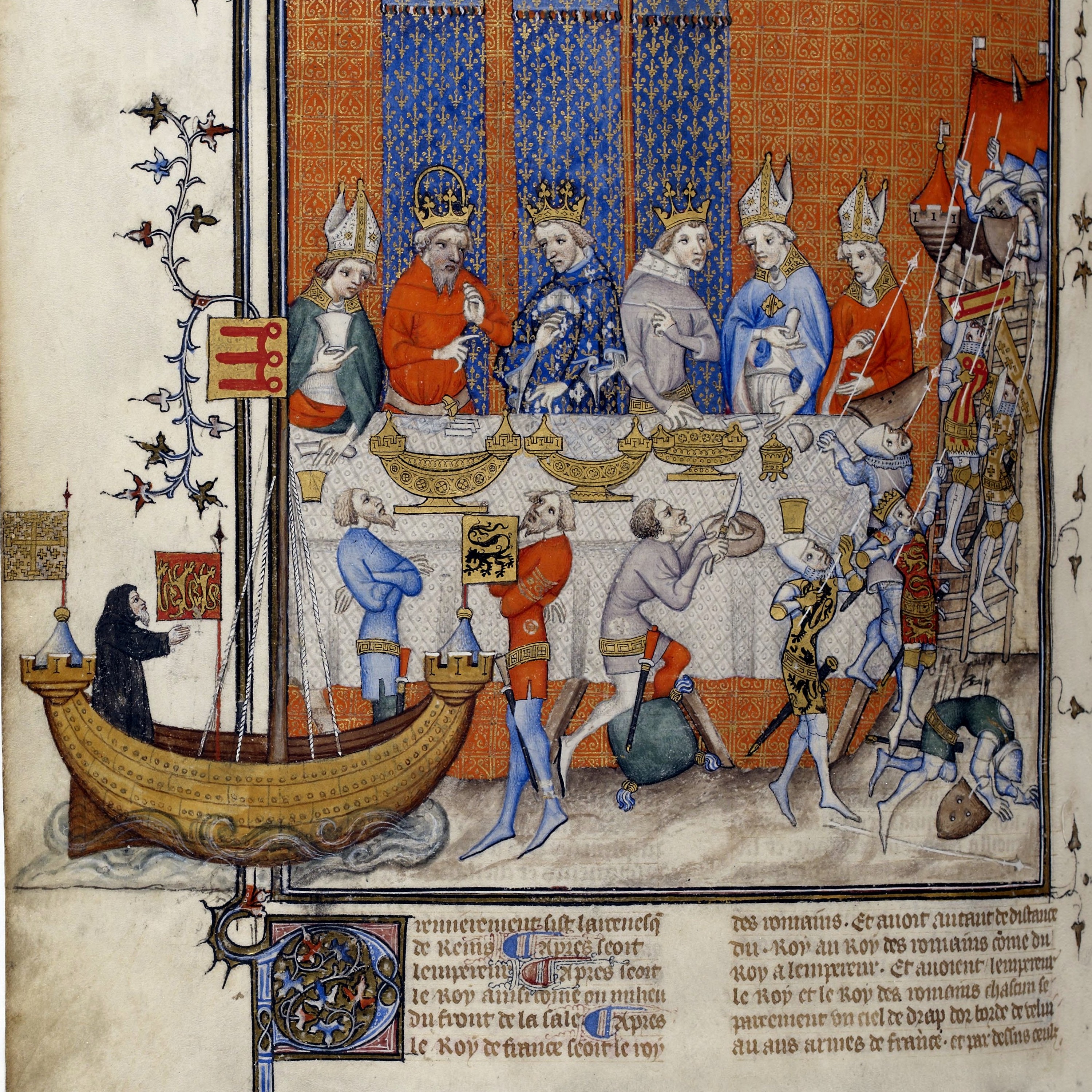
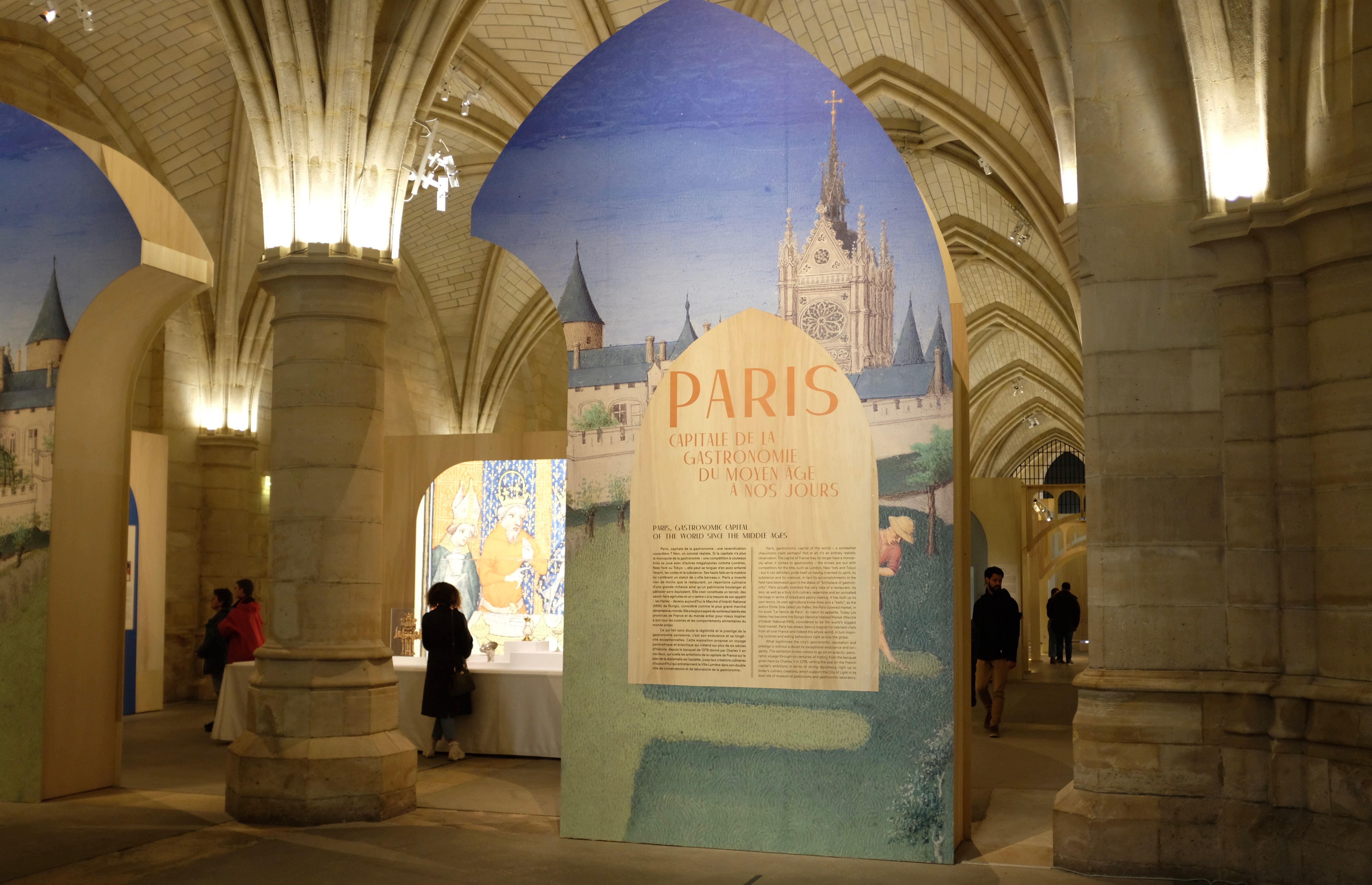
When did gastronomy first become one of France’s most potent forms of soft power? That is among the many questions asked at the fascinating new exhibition, Paris, Capitale de la Gastronomie, du Moyen Âge à nos jours, April 13th – July 16th 2023, at the Conciergerie on Ile de la Cité in Paris. The answer we learn is January 5th, 1378, during an extraordinary banquet held in this very palace by the King of France, Charles V, in hopes of impressing and gaining favour with the Emperor Charles IV of Bohemia and his son, the Prince Wenceslas, Count of Luxembourg and King of the Romans – a repast which took place in this very building, which from the 10th to the 14th century was the seat of power for the Kings of France.
For the historian Bruno Laurioux, the meal represents one of the earliest recorded examples of “gastrodiplomacy”, and though it took place more than 600 years ago, the exposition allows the visitors to appreciate the event in rich detail, presenting the entire sprawling menu and medieval paintings of the meal (like the image above from the 15th century book Grandes Chroniques de France), providing virtual reality reimagining of the scene with a ‘HistoPad’, and for a lucky few, tasting some of the dishes during a sold-out dinner which took place in May, during which the medieval cuisine served at the banquet was recreated.
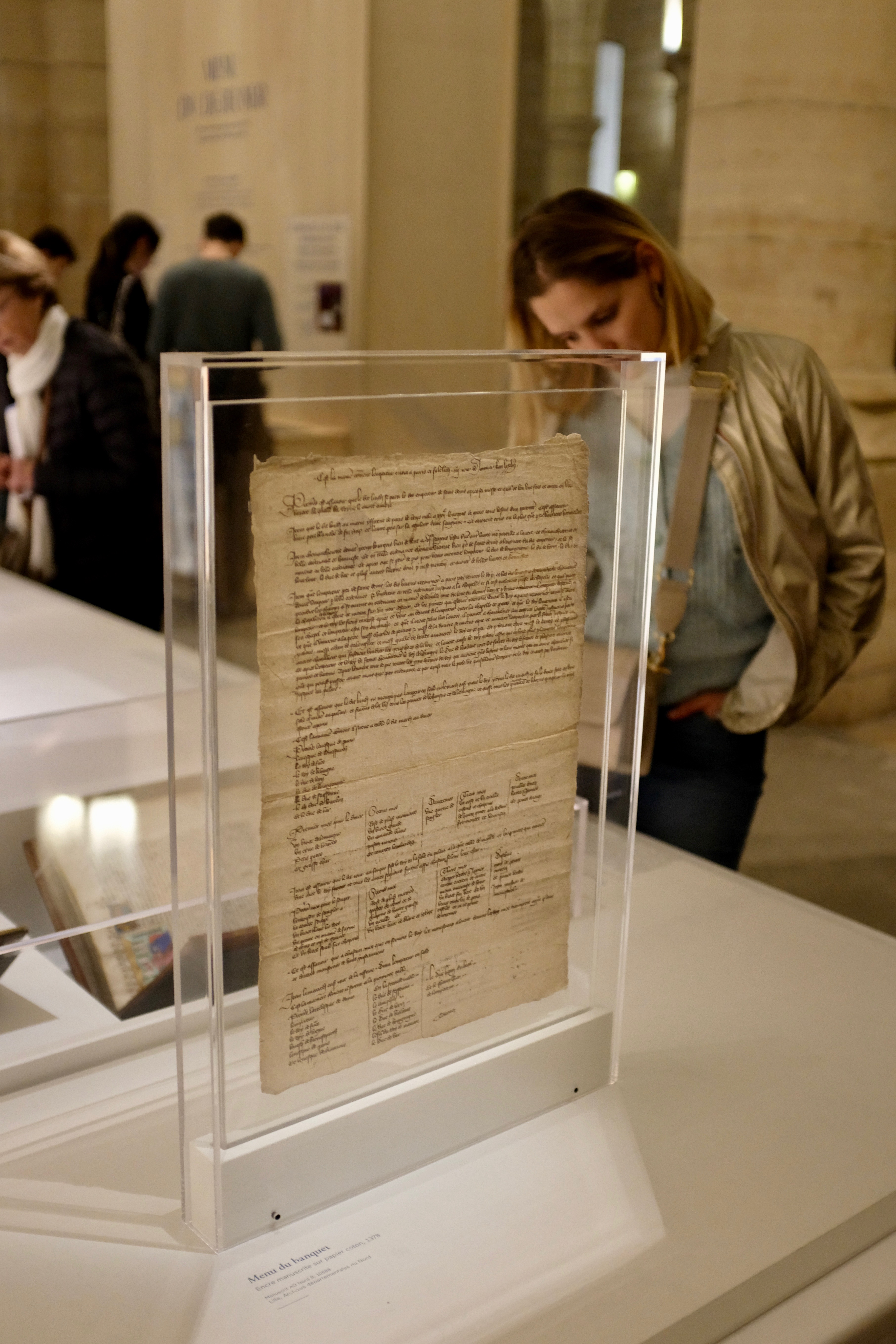
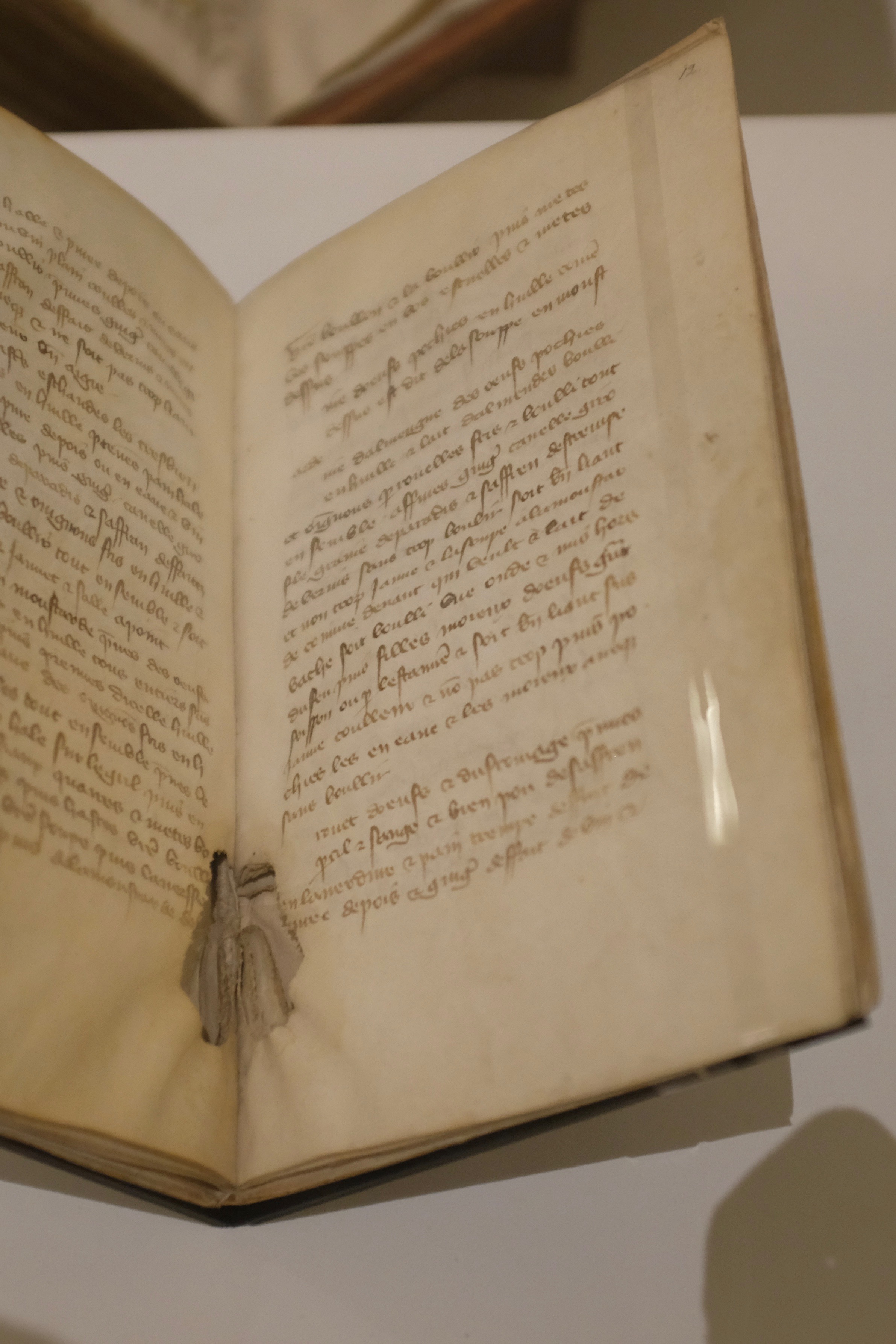
The exposition offers a chance to better know France’s first celebrity chef – Guillaume Tirel, known as Taillevent, author of the first French cookbook, Le Viandier, and the man who prepared the banquet for Charles V. The King ordered four courses of forty dishes for the meal, then decided the elderly Emperor might not be up for all that, so he settled for three courses of thirty dishes (oyster stew, capons in a fish salmis, reversed eels, roasted sea bream, salted goose, stuffed figs covered in gold leaf, Boar’s tail, stuffed gilded rabbits, roast mullet with safflower sauce, white almond blancmange…).
Menu written in 1378 for the Banquet of Charles V, prepared by the chef Guillaume Tirel aka Taillevent
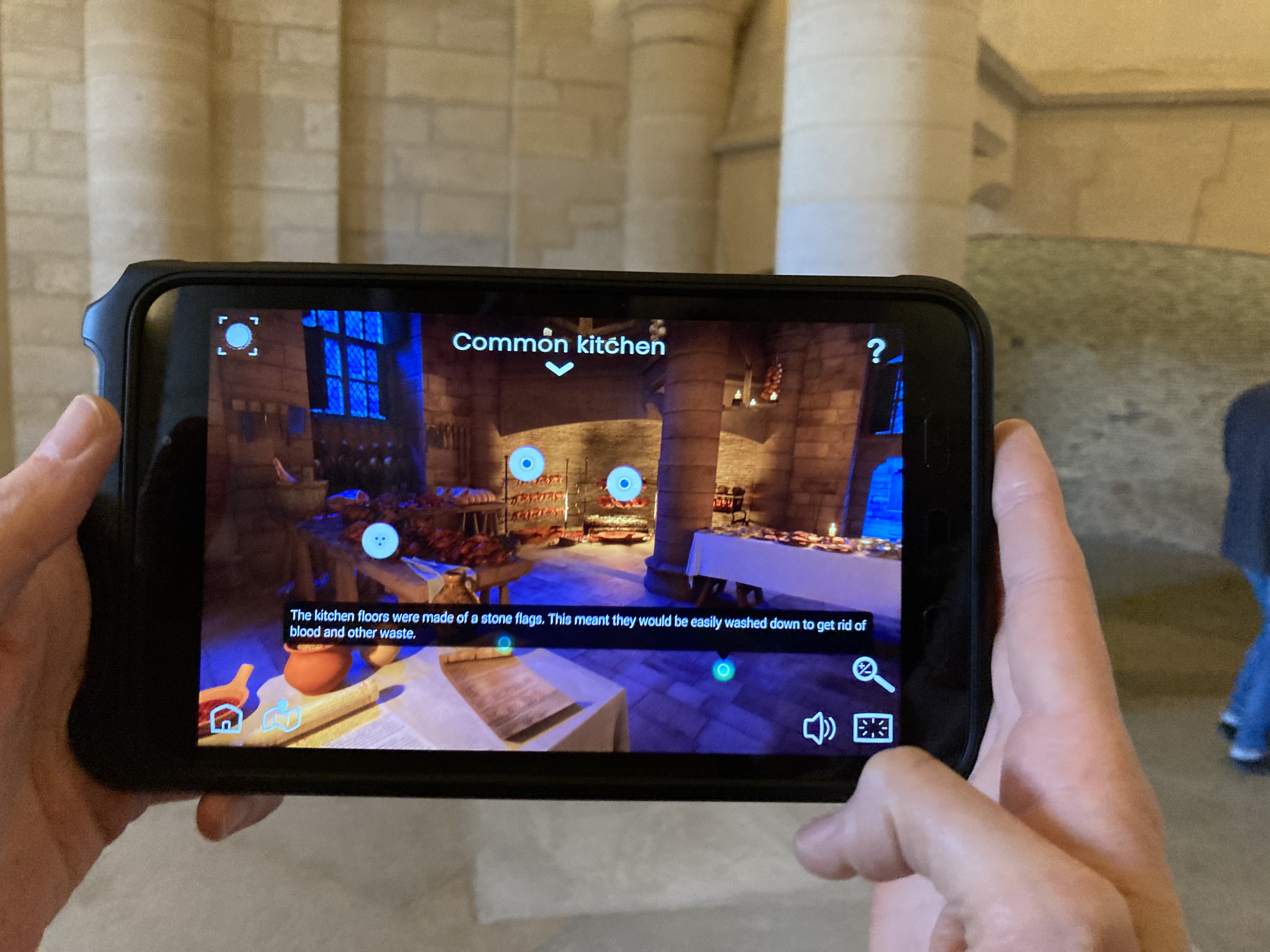
As a visitor, it’s a delight to discover this story and then step into the Conciergerie’s still-intact medieval kitchens, which have retained the same configuration they had in the 14th century when Taillevent cooked this meal here. I admit that while I’ve never been a great fan of the ‘HistoPad’ in exhibitions, but to be able to view each of the kitchen’s four enormous fireplaces as they would have looked when they were all working, each dedicated to a different task (roasted meats, fish, consommés or vegetables) was fascinating, and an example of how the technology can truly help to bring the history of a place to life.
Of course, all this represents only a fraction of the exhibition, which spans the history of gastronomy in France from medieval times to the present day, with looks back at historic meals, and at the restaurants and places which helped make Paris the culinary capital it still is today.
Here are just a few of the many delicious memories I’ll take away from the exhibition.
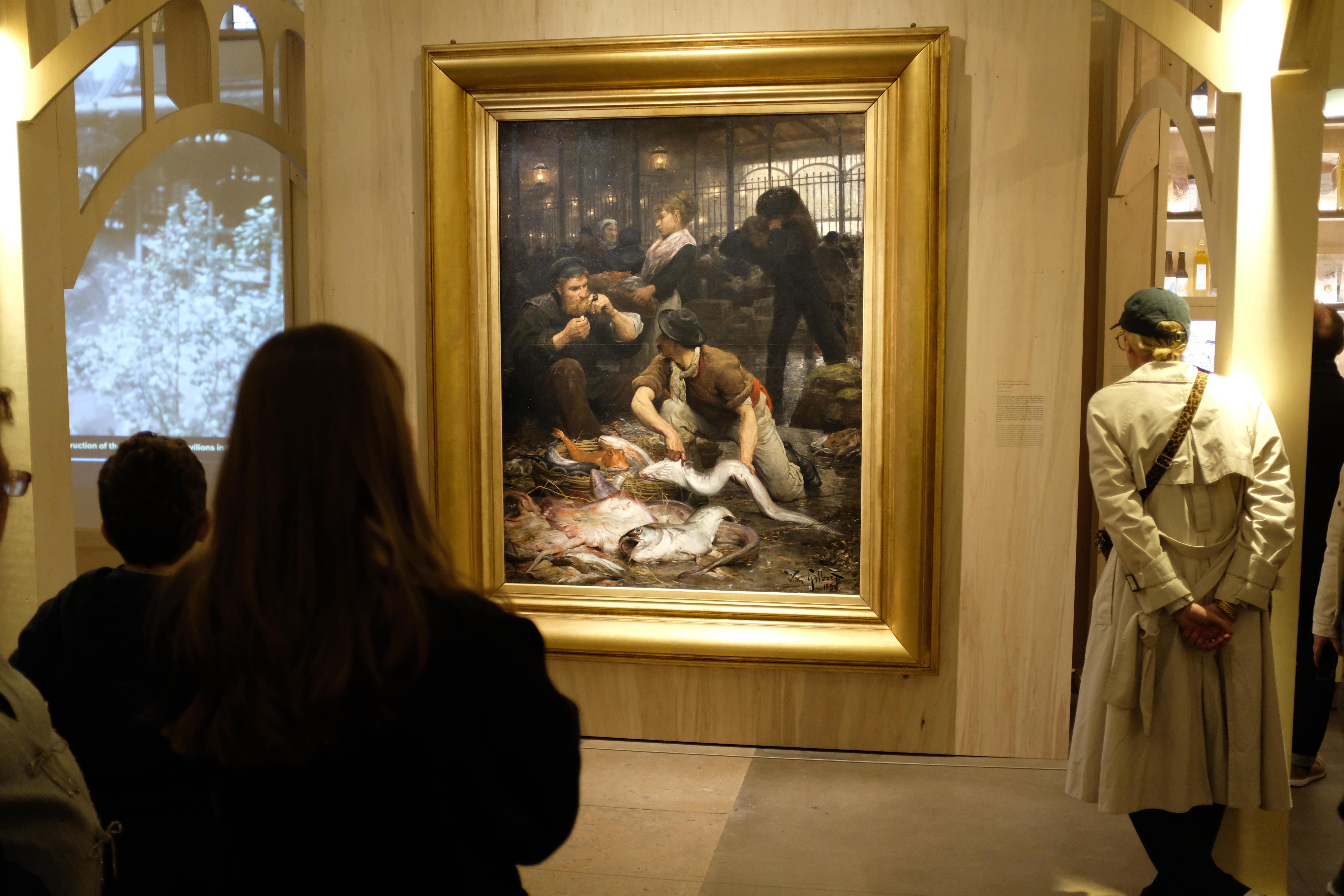
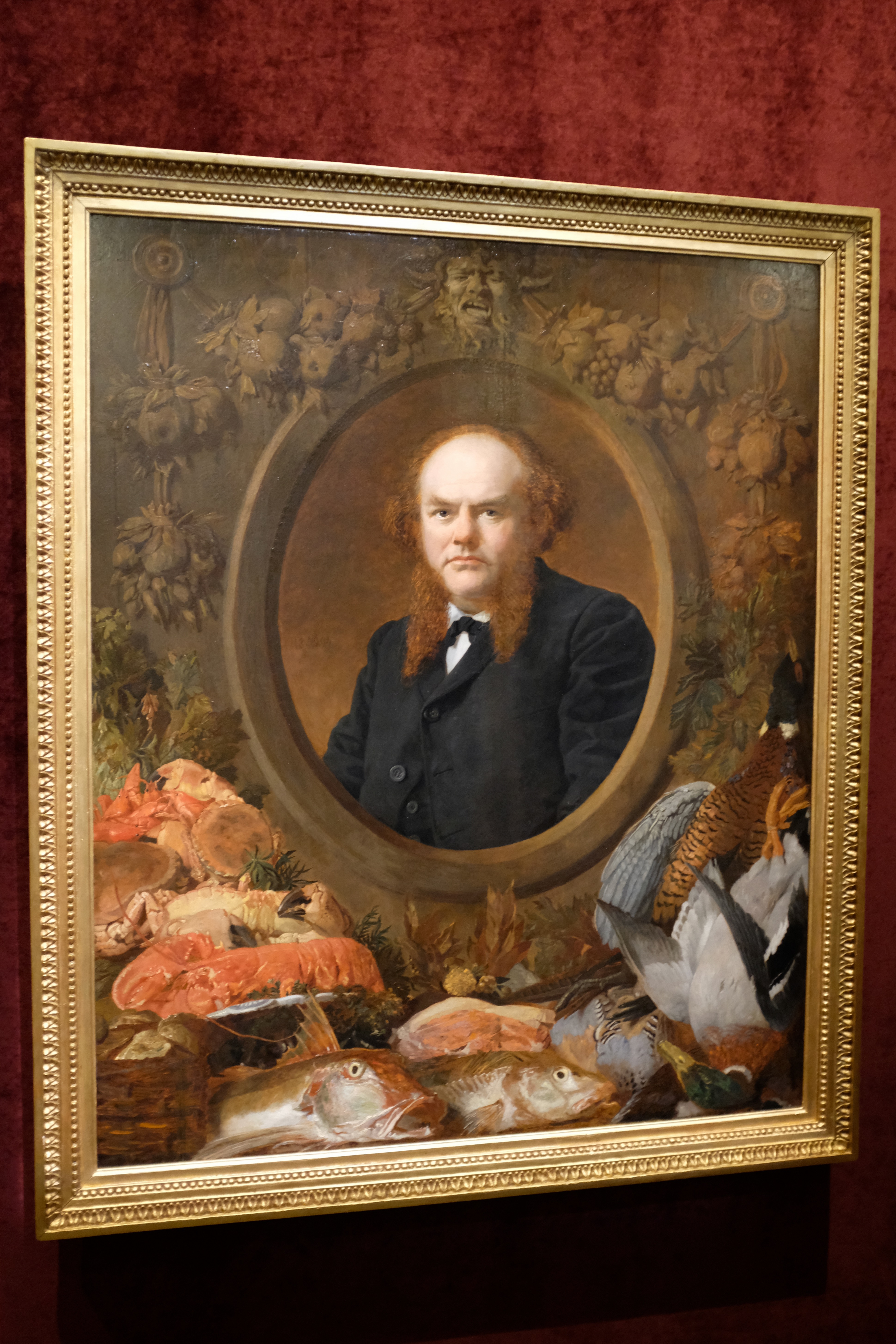
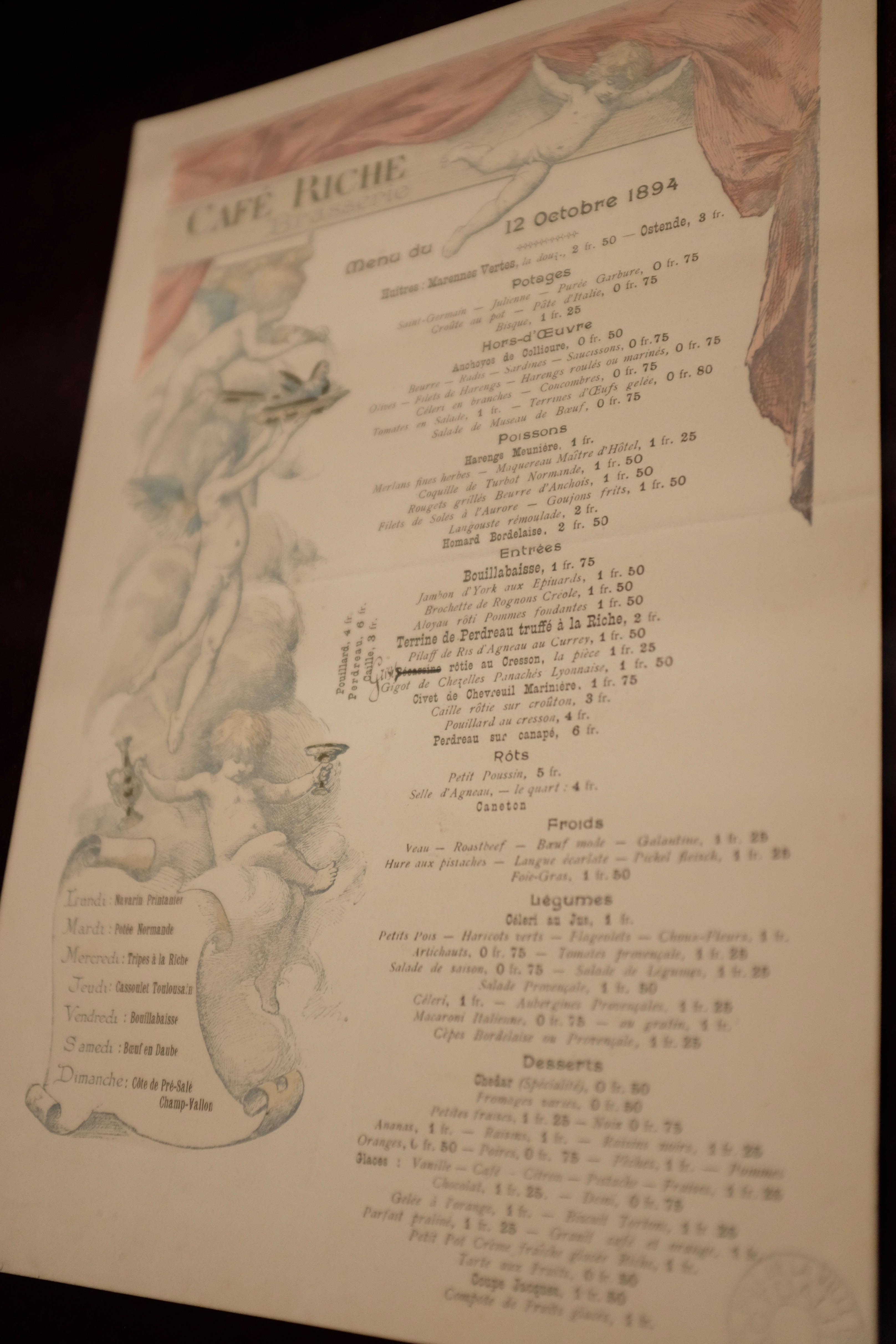
La Halle aux poissons, le matin (Les Halles, Paris) 1880, by Victor-Gabriel GilbertLe Viandier, 14th century, by Guillaume Tirel (the oldest culinary manuscript in the French language) open to a recipe for Taillevent’s oyster stew, served at the 1378 banquet L’innocent, 1949 – photo by Robert Doisneau, one of his many photos taken at the lost Les Halles food market of ParisPortrait of Frédéric Delair, founder of the legendary restaurant La Tour d’ArgentMenu from Café Riche, Paris, 1894Dîner aux Ambassadeurs, Paris around 1880Under the vaults of the Conciergerie for Paris, Capitale de la Gastronomie, du Moyen Âge à nos jours (at the Conciergerie in Paris, April 13th – July 16th 2023)
Breton sushi chef Xavier Pensec handling one the extraordinary Japanese knives he uses daily in his restaurant Hinoki
Sushi à la Française
Brittany is one of the most isolated and gastronomically-under-appreciated regions in France, but for curious gourmets this land of wild coastlines and enchanted forests has much to offer – and Breton sushi chef Xavier Pensec is a prime example!
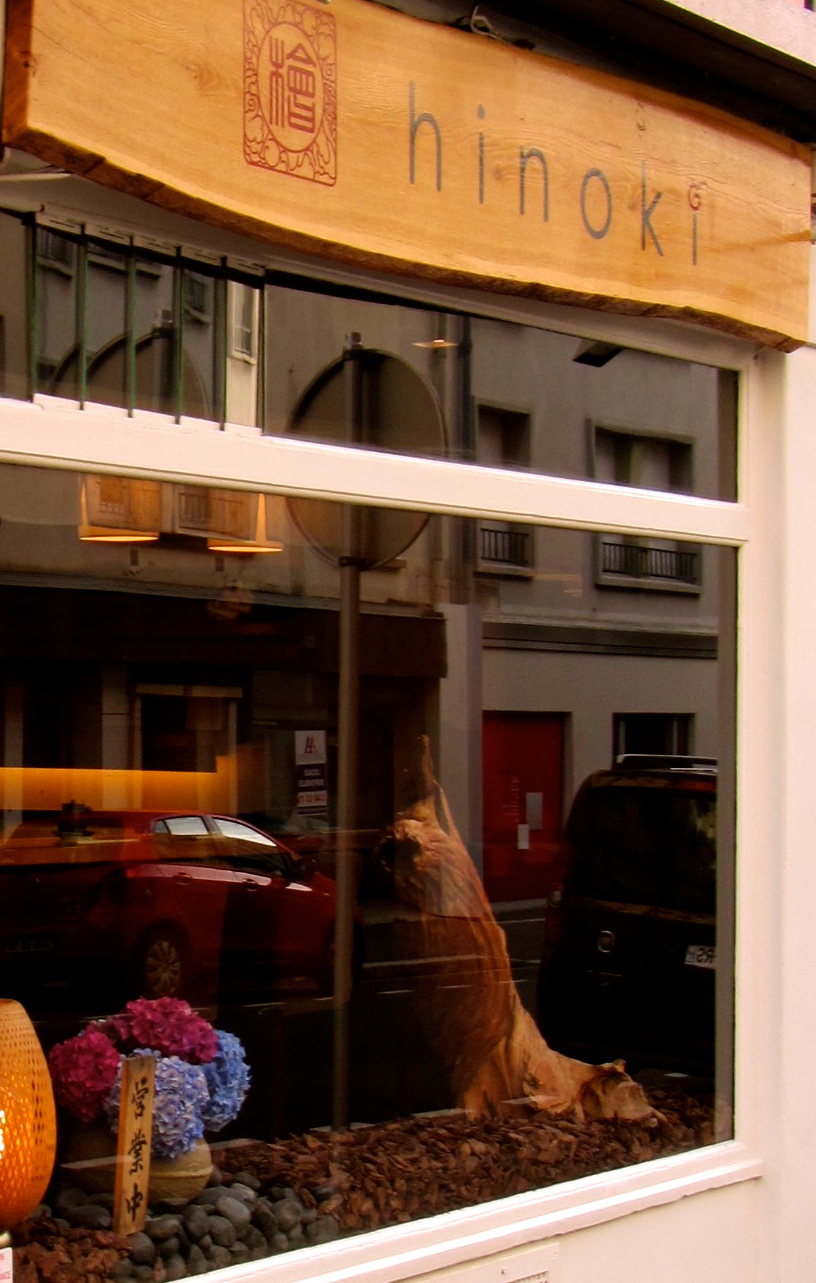
Sushi à la Française? You won’t find it in Paris. To discover this singular delicacy, you’ll need to head to the French department called Le Finistère—literally, ‘the end of the earth’. It’s a 4+hour voyage by train from the French capital to reach the westernmost tip of Brittany. There, in the city of Brest, you’ll find the restaurant named Hinoki.
France boasts numerous brilliant chefs who have chosen isolated locations from which to defend daring cuisines, such as Michel Bras and Olivier Roellinger, and more recently, Eric Guérin and Alexandre Gauthier. But counting among the most audacious must certainly be Xavier Pensec.
A native of Brittany, Pensec began feeling the pull of the Far East as a young man. Over the years, he tried to make a living selling Japanese antiques or importing incense. Then, during a visit in Tokyo in his 30s, Pensec discovered the artistry of true sushiya—sushi chefs. Captivated, Pensec enrolled in the Tokyo Sushi Academy, and began making frequent pilgrimages to the cuisine’s greatest masters such as Mizutani and Jiro—whose Tokyo restaurant was the first sushi house to ever receive three Michelin stars (and who was the subject of a splendid documentary).
In Tokyo, Pensec met his future wife, Mika Kobayashi, a Japanese food consultant. Together, they came up with a mad plan: to return to France and open up their own restaurant in Pensec’s native Brittany, where they’d try to recreate the kind of sushi that so enthralled them in Tokyo. It was a huge gamble to say the least; Bretons, though historically great explorers and emigrants, ironically don’t have the reputation of being particularly cosmopolitan or drawn to ‘exotic’ foods. Where sushi is found in Brittany it’s inevitably of the banal fast food sort. But what Xavier and Mika created in 2008, in a small former crêperie on the discrete side street of rue des Onze-Martyrs in Brest, was something entirely different.
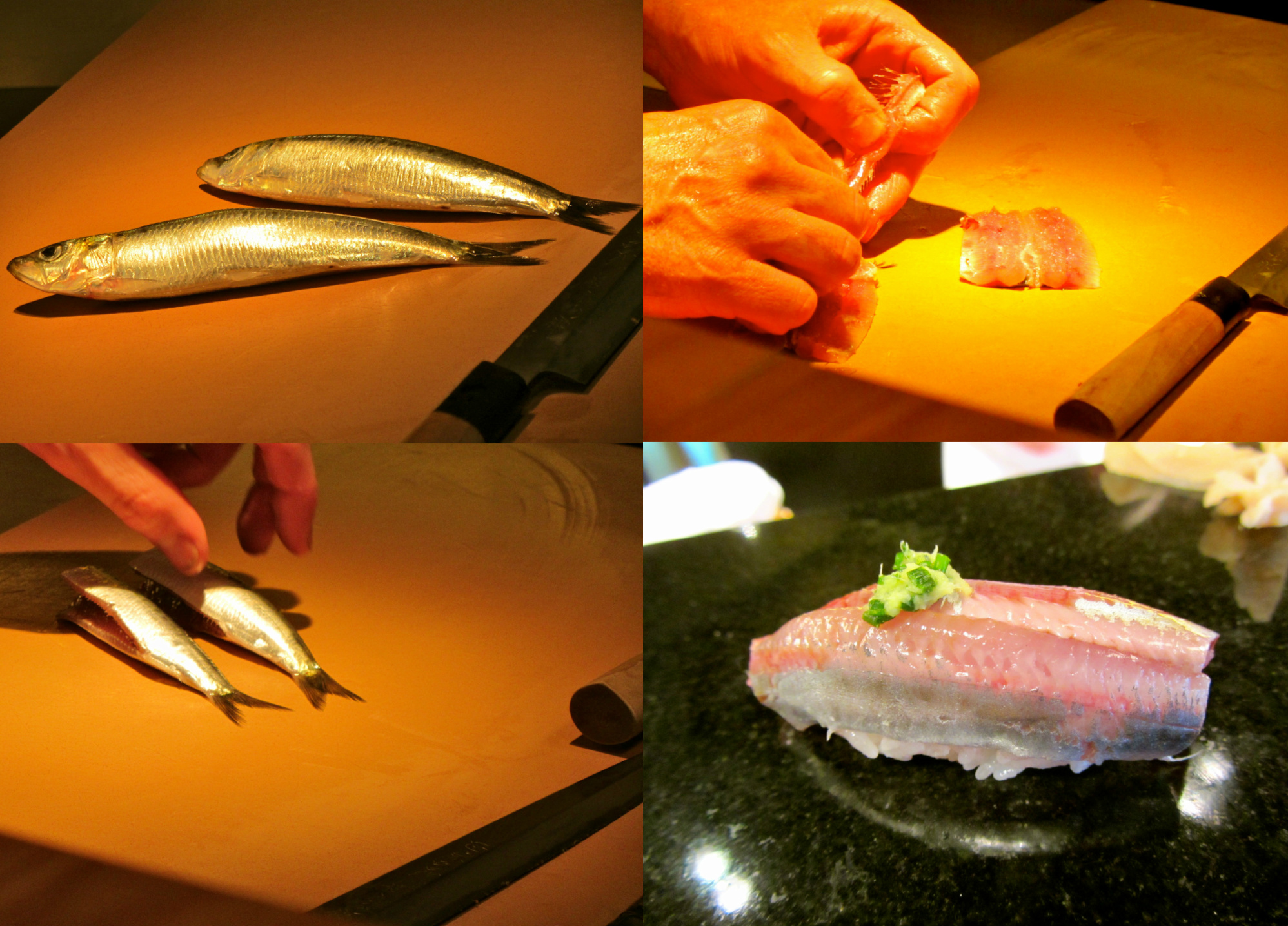
Pensec transforms the humble Breton sardine into a matter of gastronomy
________________
The dish that has come to be known around the world as sushi was created in the early 19th century by a chef named Hanaya Yohei in Tokyo. It differed from other versions of sushi in that it was not made with fermented fish (which could be preserved for long periods) but rather with raw fish, freshly-caught from the bay of Tokyo—or Edo, as the city was formerly named. The dish was called Edomae zushi—which could be translated loosely as “sushi from the bay of Tokyo.”
“The true spirit of sushi is about being local,” explained Mika to us during our last visit to Hinoki. “Those who really respect the Edomae spirit have always made sushi according to this tradition of using only local ingredients. Today, many sushi chefs have forgotten this. So I feel we really are trying to continue this tradition, here in Brittany.” Pensec even has a name for this Breton expression of Edomae zushi. “Mae means ‘in front of’,” says Pensec. “So you could say here we are making Finistère-mae sushi.”
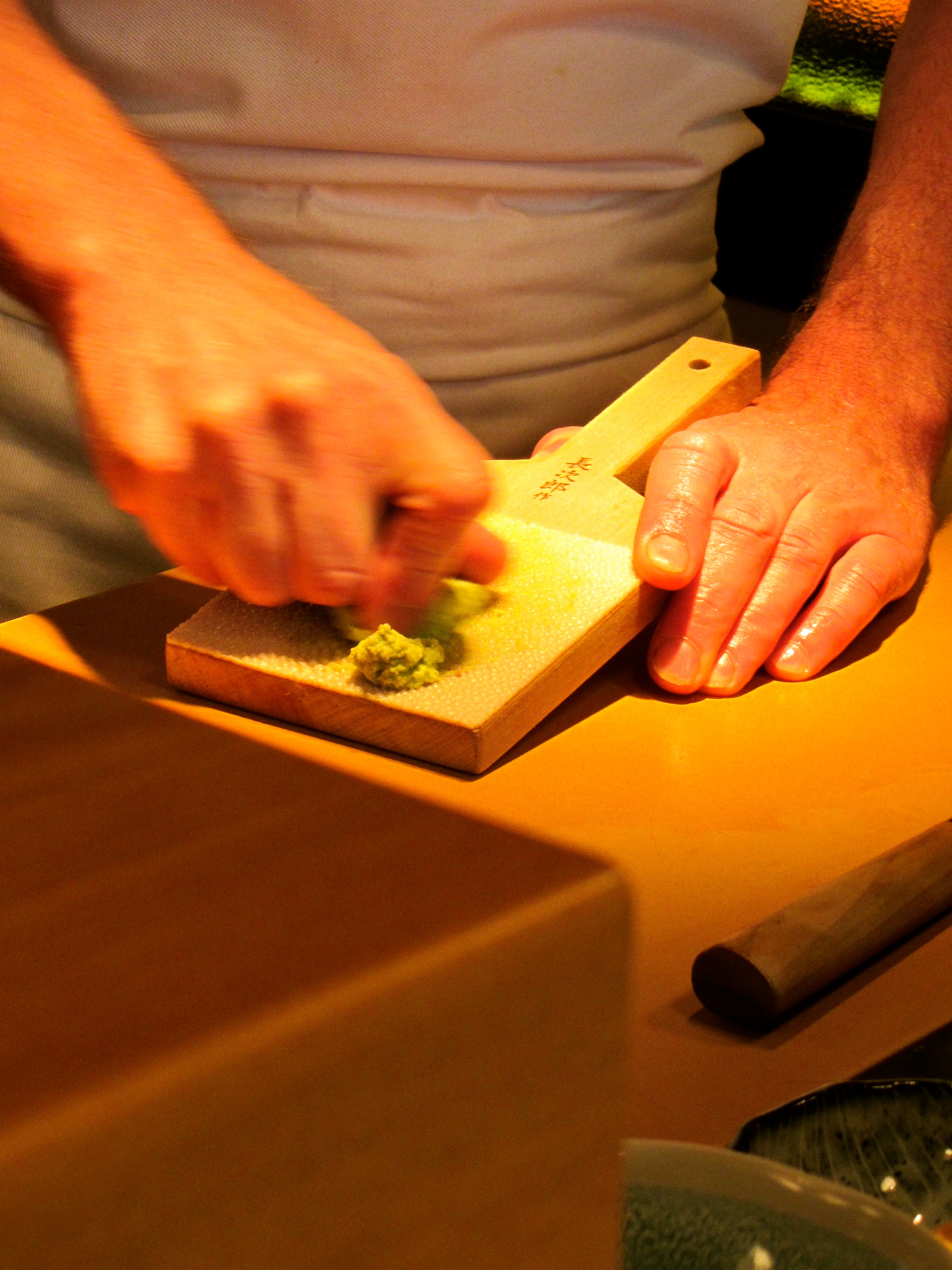
Pensec grating fresh wasabi root
That aptly describes this new and—for now at least—unquestionably unique cuisine that Xavier and Mika have created: sushi that is at once faithfully Japanese and fundamentally French, and more specifically, Breton. Pensec may import premium Japanese rice and the finest wasabi root grown, but don’t expect Mediterranean red tuna or Norwegian farmed salmon to be on the menu. Sushi made from trout filet and eggs from rivers in the nearby forests of the monts d’Arrée; line-caught sea bream or bonito from Concarneau; langoustine royale from the port of Guilvinec; scallops from the bay of Brest—these are the flavors of Finistère-mae sushi.
Indeed, with the exception of a few incredible imports, all of Pensec’s seafood comes from the ocean ‘in front’ of his restaurant, as do most of the other ingredients. “My wife is always saying, one day we won’t use soy sauce any more,” he says. “She wants us to use 100% local ingredients.”
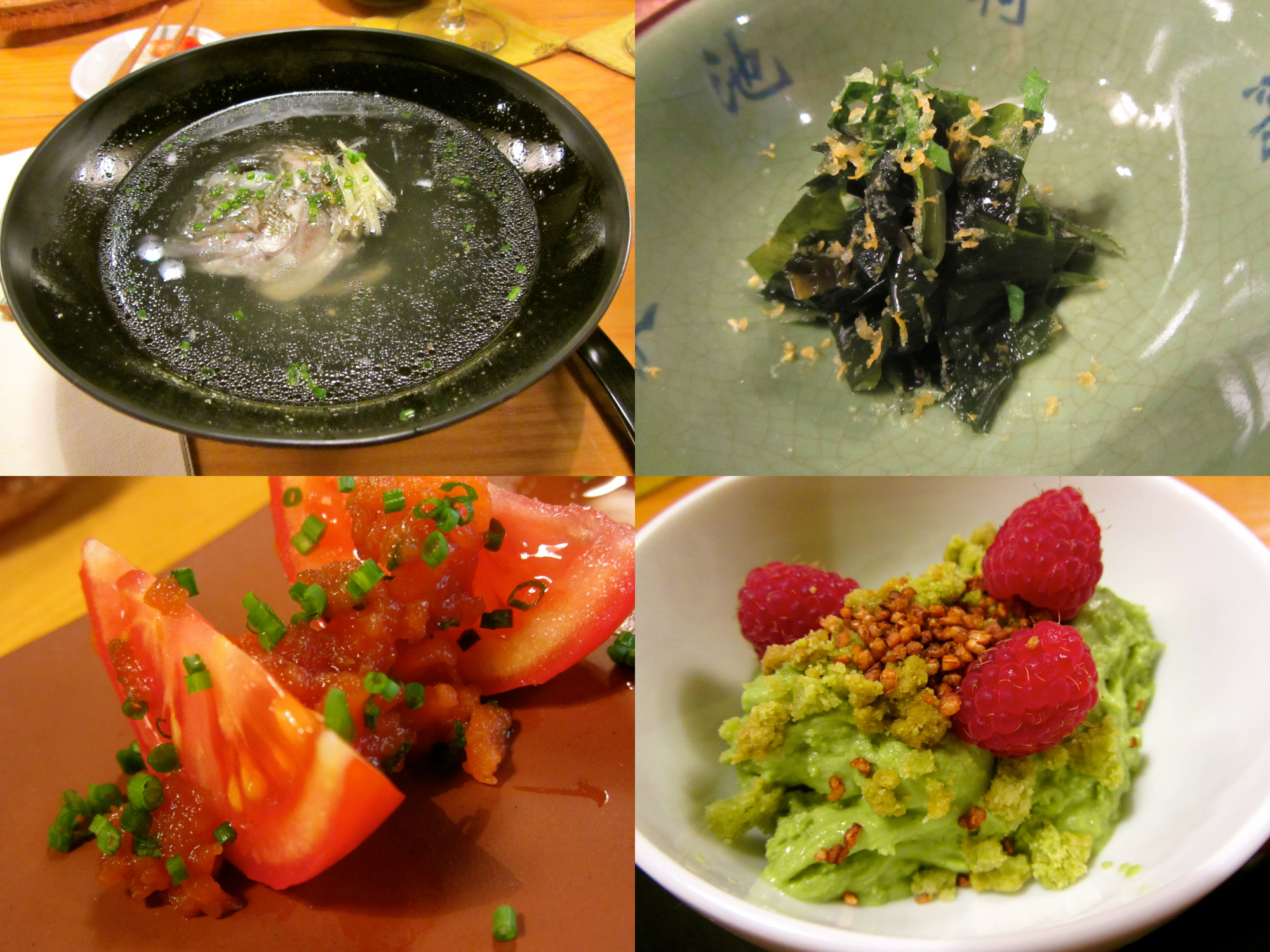
Mika punctuates a sushi omakase at Hinoki with small dishes, such as a fish broth and salads of seaweed and tomatoes, before closing the meal with green tea ice cream topped with grilled Breton buckwheat.
The locavore commitment can be exhausting. Pensec often works 14 hours a day, up before dawn to meet fishermen returning with their catch at ports all along the coast of Finistère—Portsall, Loctudy, Le Guilvinec, Roscoff, Concarneau… Xavier and Mika share a different philosophy about fishing with the Breton fisherman they meet, and slowly are convincing some to adopt Japanese techniques such as the Ikejime method for humanely killing fish immediately after capture—a technique which has the additional benefit of greatly improving the flesh quality. Pensec chooses a fish based on its freshness, but also depending on the season of the year. If the catch on a given day doesn’t meet his exacting standards, Pensec won’t hesitate to call clients with reservations and ask them to come another day.
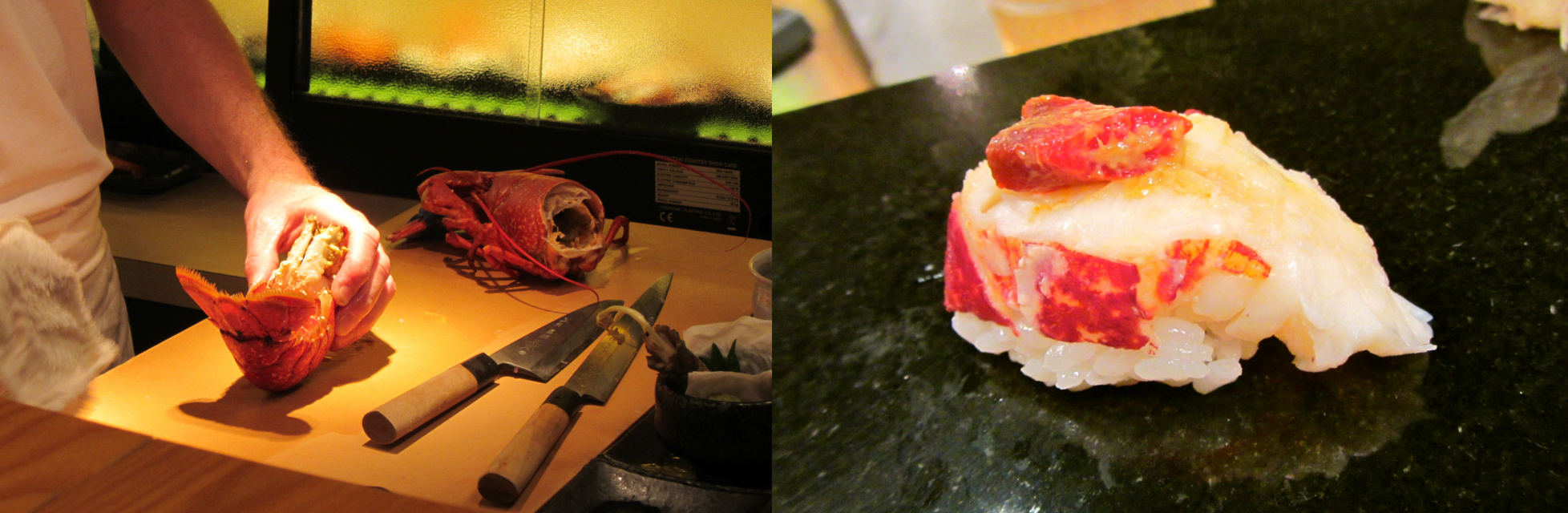
Pensec creating sushi from some extraordinary langoustine
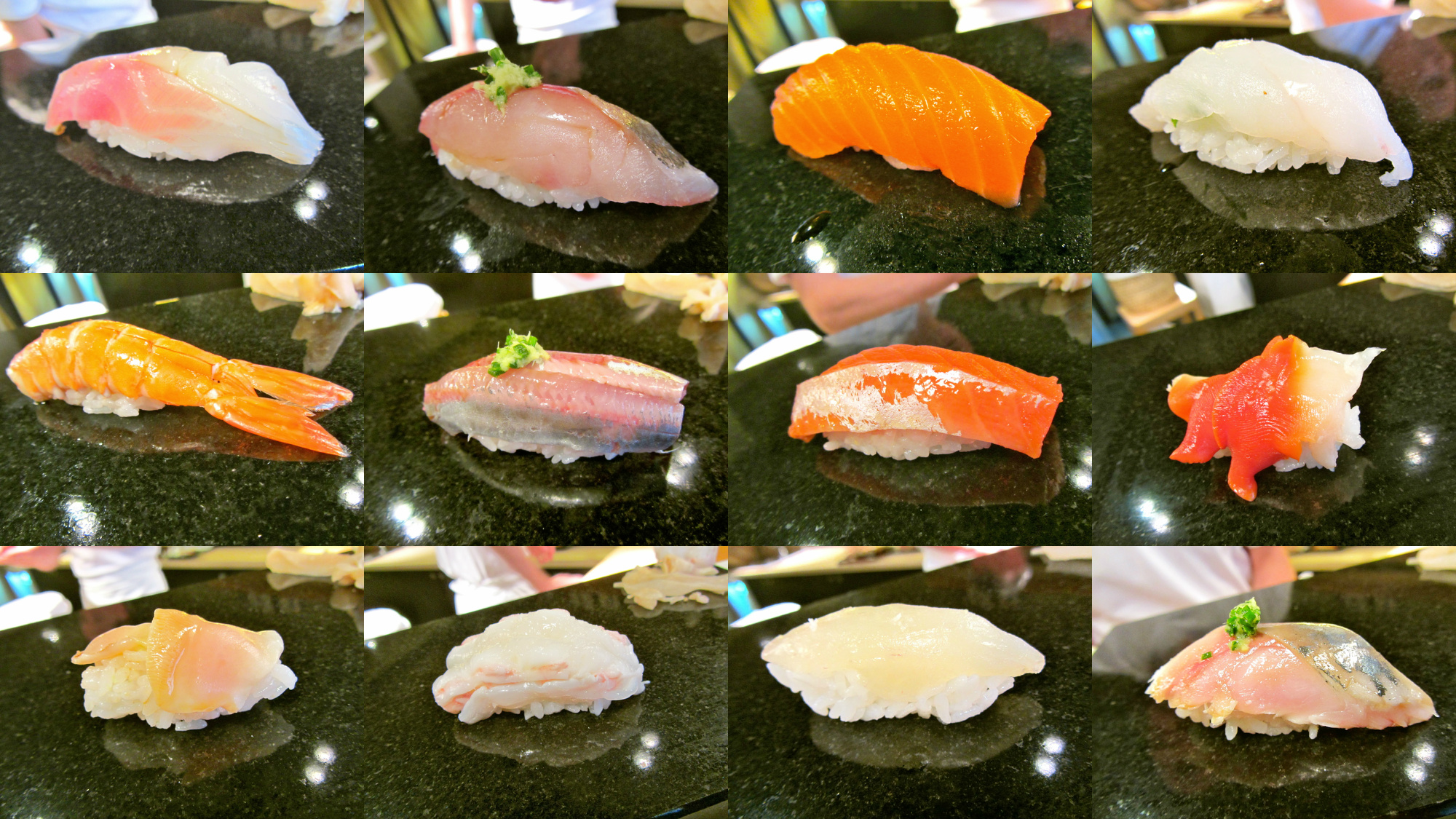
On our last visit to Hinoki, Pensec prepared a true Breton Omakase (a chef’s choice dinner), preparing us sushi one by one and astounding us with the diversity of the seafood to be found in the waters around Finistère. In addition to some of the finest imported salmon and shrimp I’ve ever eaten (wild Alaskan Sockeye and Irish organic-farmed salmon as well as Obsiblue prawns from New Caledonia), Pensec served gilt-head bream (Fr. dorade), Jack mackerel (chinchard), sardine, sole, clams, smooth clams (vernis), octopus, mackerel, langoustine royale and lobster.
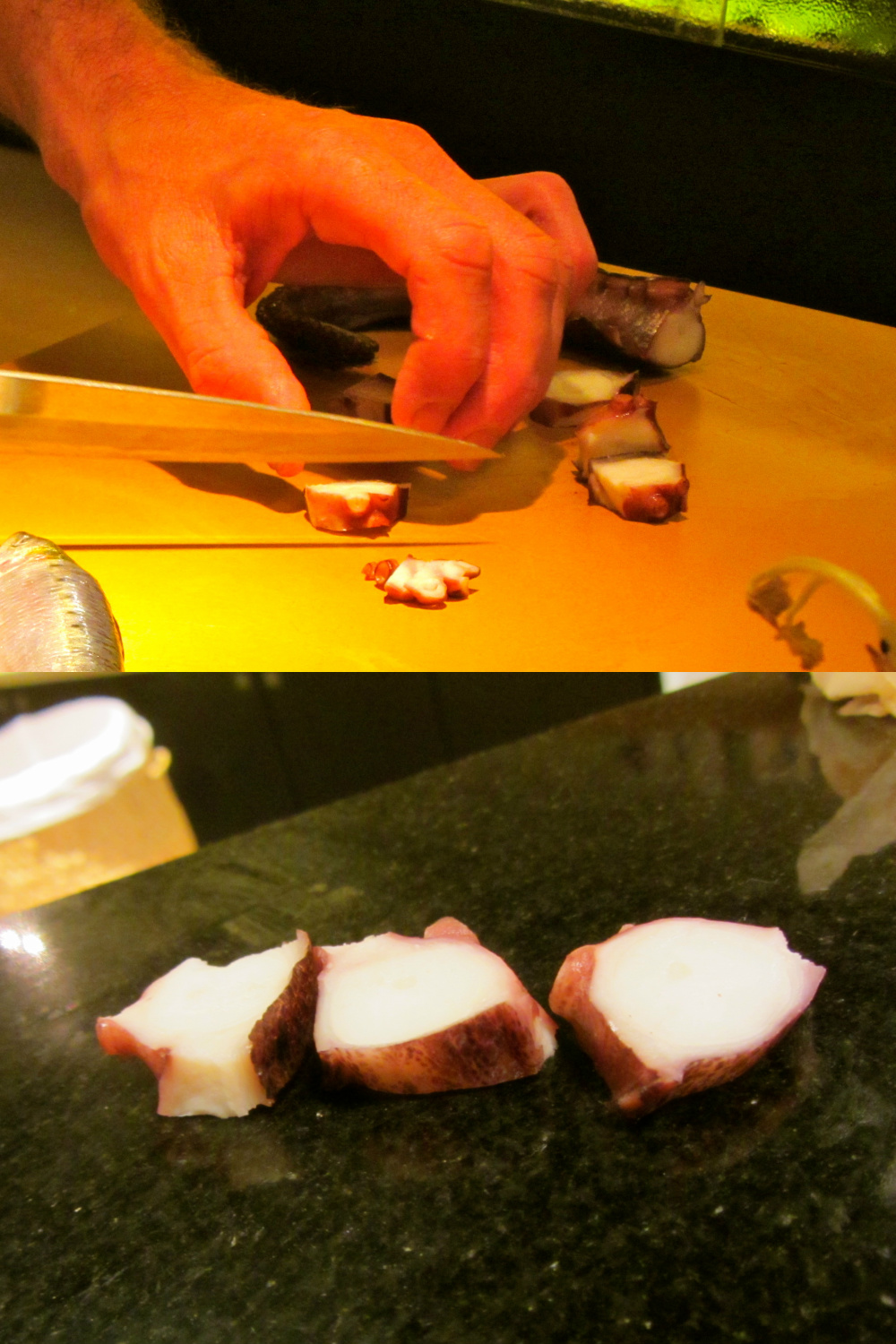
At Hinoki, the octopus is massaged for an hour
Pensec often serves fish prepared more than one way—straight up raw, with a dab of fresh ginger and chives or fresh grated wasabi, marinated shime saba style, or pressed for hours between fresh leaves of Breton seaweed. The fabulous consistency of the octopus is attained by massaging it continuously for one hour, an arduous technique Pensec borrowed from the kitchens of Jiro.
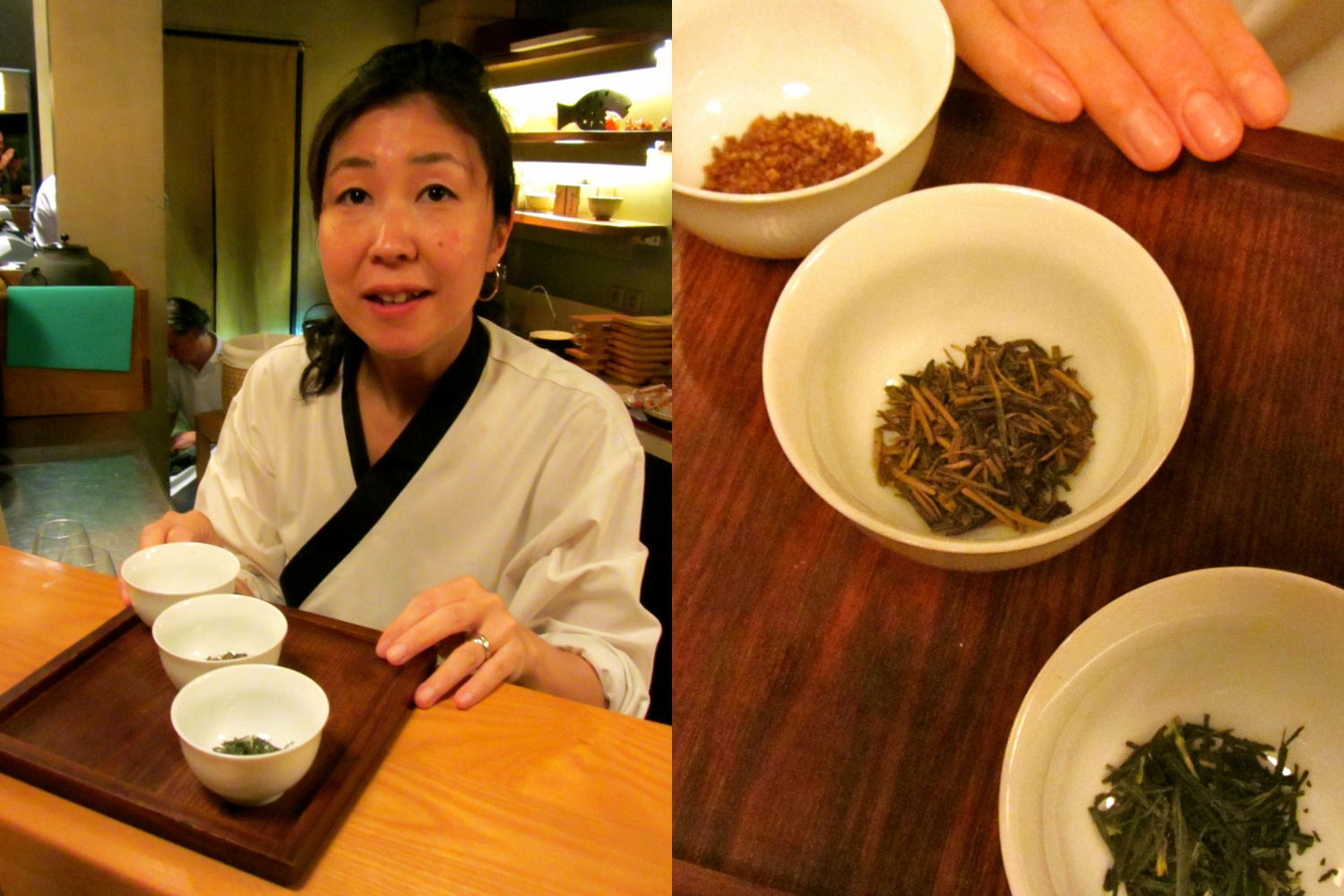
The sake served at Hinoki has all the fruit aromas, complexity and length on the palate of fine white wine (of which they have an ample supply as well). The tea is selected from the collections of Tokyo tea sommelier Yoshi Watada, including some of the rarest, most exclusive teas in Japan, representing a handful of kilos out of a plantation’s entire harvest (and typically only used in Japan for competitions between tea producers!).
Mika displays Hinoki’s rare teas
In all, dinner at Hinoki is a revelation, a glorious feast for the senses. Pensec rolls rice balls and spreads dabs of wasabi with the grace of a dancer. Even his simplest sushi are exquisite. He notably transforms the humble Breton sardine into a matter of serious gastronomy—the filets and rice, perfectly pleasing in texture and temperature, brushed with Pensec’s secret sauce and topped just with a speck of ginger and chives, make for a divine mouthful. And to ponder the history, the passion, the savoir-faire behind every bite, it’s no exaggeration to say that a piece of Pensec’s sushi, glistening on a slab of marble, is a small work of art.
With their abundant, palpable talent, their impeccable sourcing and locavore philosophy, Mika and Xavier would seem to have come up with a jackpot business plan, so much Hinoki shares in spirit with many of the restaurants currently the talk of the international food scene. “We really hope so, but then again we live at the end of the world,” says Mika. “So it’s difficult to share [what we are doing] with international people.” Mika was making a good living as a food consultant in Tokyo, but for now the couple often struggles to bring home more than the equivalent of a minimum wage, so steep are the costs associated with the ingredients they use, and so few are the number of reservations they accept, so as to be able to create the kind of intimate, immersive experience they want for visitors. “Yes, we might lose a lot of money this year, but we decided to do it this way,” says Pensec. “We can’t do it ‘medium rare’—it’s all or nothing.”
Lobster sushi, topped with lobster roe
The risks Pensec takes, the potency and fragility of his project, brings to mind many of the most dynamic figures that’s I’ve met in French gastronomy today—men and women driven by passion to create wines, cultivate products and imagine cuisines which are far from guaranteed they will find a market. And yet somehow many of them do, and I have to believe Xavier and Mika will too.
When I last came to Hinoki, the Japanese ambassador to France was coming over the weekend to welcome a Japanese boat to port in Brest, and would be dining at Hinoki with his whole delegation. In the last year and a half, notably since Xavier appeared as a guest chef for an event at the Sake Bar in Paris, increasingly journalists are making the trek out to Brest to discover Hinoki for themselves. The French gastronomic press seems to finally be waking to this phenomenal new cuisine that has emerged far outside Paris-centric food scene.
I hope still more will make that trek soon, and that one day soon Mika and Xavier will have the international clientele of foodies they deserve. Traveling gourmets may naturally think that sushi is about the last thing they would come to France for, but I think that anyone who is interested by the questions about food, culture and identity that are fueling creativity in many top restaurants around the world today will find sitting down to an omakase dinner at Hinoki an enthralling ride.
________________
Pensec is the grandson of a Breton fisherman, but it took traveling half way across the world and immersing himself in a completely foreign culture and tradition for him to finally reconnect with his own roots, to rediscover his people’s age-old bond to the ocean—a bond not unlike the one Japanese have. Ironically, it’s perhaps because today he feels more Breton than ever before that he is now able to create some of the finest ‘Edomae’ sushi outside of Japan.
As the great Paris-based, Tokyo-born food writer Chihiro Masui put it, “it’s in wanting to reproduce the pure Japanese tradition that he succeeded in the impossible: creating the first true sushi français. Or should I say breton?” The perfect sushi of Mizutani and Jiro that continue to inspire Xavier Pensec may still be an ocean away, but maybe the success and recognition he deserves is not so far off anymore. Masui, for one, is convinced: “I would not be surprised if one day he joined the ranks of the best sushiya in the world.”





 Jeffrey T Iverson .com