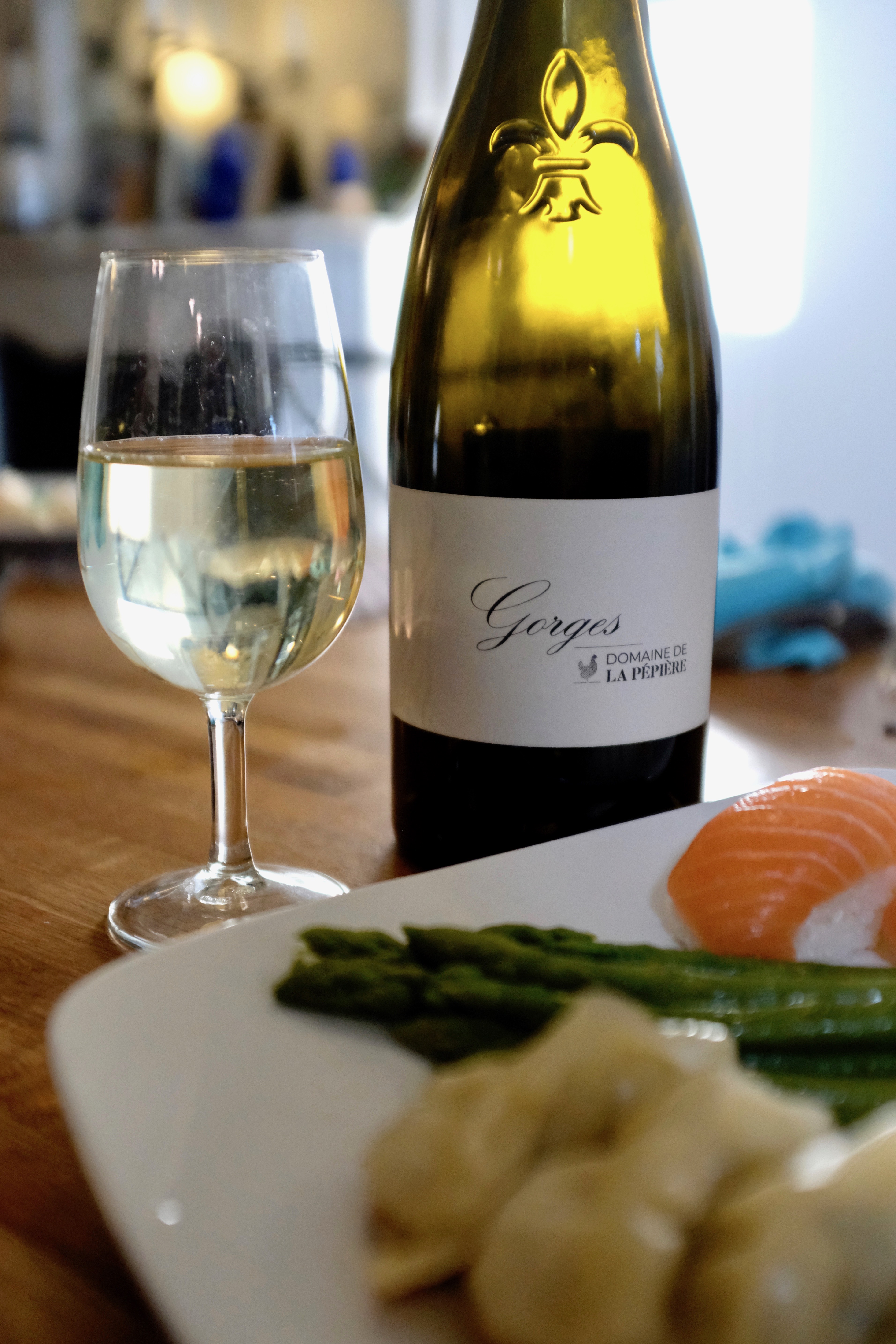
I recently had the pleasure of re-tasting one of the wines that blew my mind last year (and in so doing, completely changed my conception of the much-maligned Muscadet): the delicious cuvée ‘Gorges’ from Domaine de la Pépière, a biodynamically farmed estate in the perennially underrated Loire valley sub-region of Muscadet, just off the Atlantic coast. Fermented spontaneously with native yeasts, and aged on its lees in underground, glass-lined cement tanks for more than 3 years before bottling… At once chiselled and sappy, bristling with tension and minerality, boasting lovely floral, citrus and flinty aromas, and an endless saline finish, this is an exemplar of the new style of wines coming out of Muscadet today, wines sommelier David Biraud (Thierry Marx / Mandarin Oriental, Paris ) so elegantly describes as jus de cailloux – stone juice.
Gorges is the name of the first Muscadet Cru, created in 1998 to distinguish the wines from a commune with a distinctive soil type (today there are 10, from Cru Clisson, whose granite terroir yields rich, textured wines, to Cru Goulaine, whose terroir of gneiss and mica-schist makes elegant, opulent wines). The wines from the Cru Gorges are part of a vanguard over the last 20 years of a different breed of Muscadet created as expressions of distinctive terroirs, and which includes both the new Cru wines but also many other bottlings from sensitive winemakers with exquisite soils (from Domaine de l’Ecu’s “Orthogneiss” to Domaines Landron’s “Amphibolite”, respectively named after the igneous or metamorphic stone found in a specific vineyard).

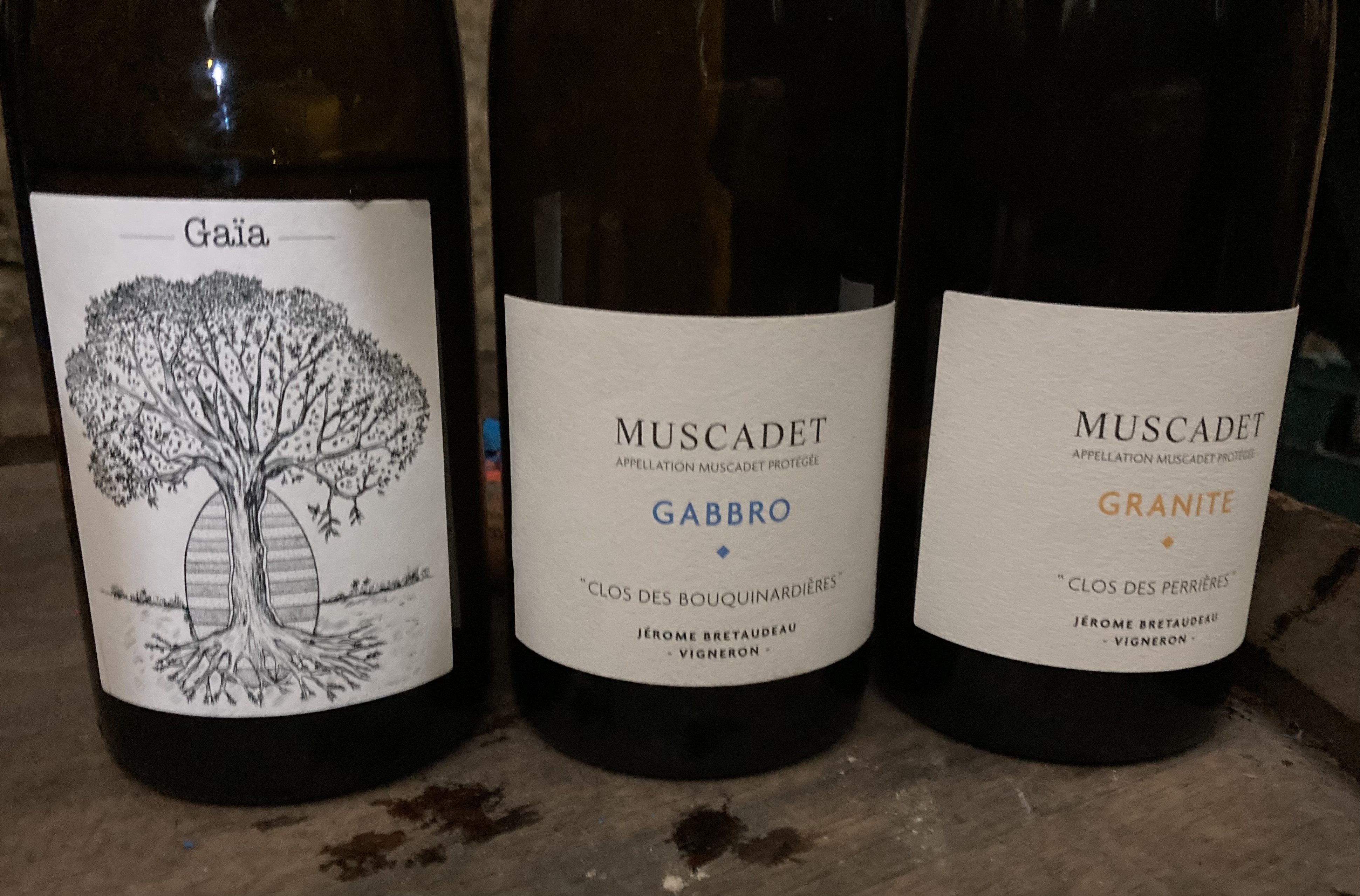
The geology of Gorges is special, boasting deep soils of clay and quartz pebbles over a homogenous subsoil of gabbro – rocks from the oceanic crust of eons past, formed by the slow cooling of magnesium-rich and iron-rich magma. What is the subsoil of the vineyard that gives Jérome Bretaudeau of Domaine de Bellevue his cuvée Gaia, considered by many to be one of the greatest Muscadets created today? Gabbro. These volcanic wines of Muscadet’s gabbro terroirs are among the firmest, most structured and most intensely mineral of all – especially when made using biodynamic viticulture and meticulous, low-interventionist winemaking like of Domaine de la Pepière. These are white wines for ageing: this 2019 is just starting to open up, ideally you should open this after 5 or 10 years if you really want to knock your socks off.
Back in the early 1990s, before the Cru Gorges was created, at a time when too many producers in Muscadet were prioritizing quantity over quality, the winemaker Jo Landron of Domaines Landron charted a new path for the region. Landron was among the first winemakers in the region to abandon chemicals in the vineyard and the cellar, and to develop a range of cuvées to highlight the different soil and bedrock types found in his estate’s various plots, from those with a subsoil of the metamorphic rock Amphibolite, to the sandstone over clay terroirs of his Fief du Breil plot, to his Clos la Carizière plots made up of orthogneiss and quartz rocks. The quality and distinctiveness of these single-vineyard bottlings, all made with the same grape – Melon de Bourgogne – was so undeniable, that even the world of fine dining in Paris (which by the 2000s had all but banned Muscadet for its menus) had to take notice.
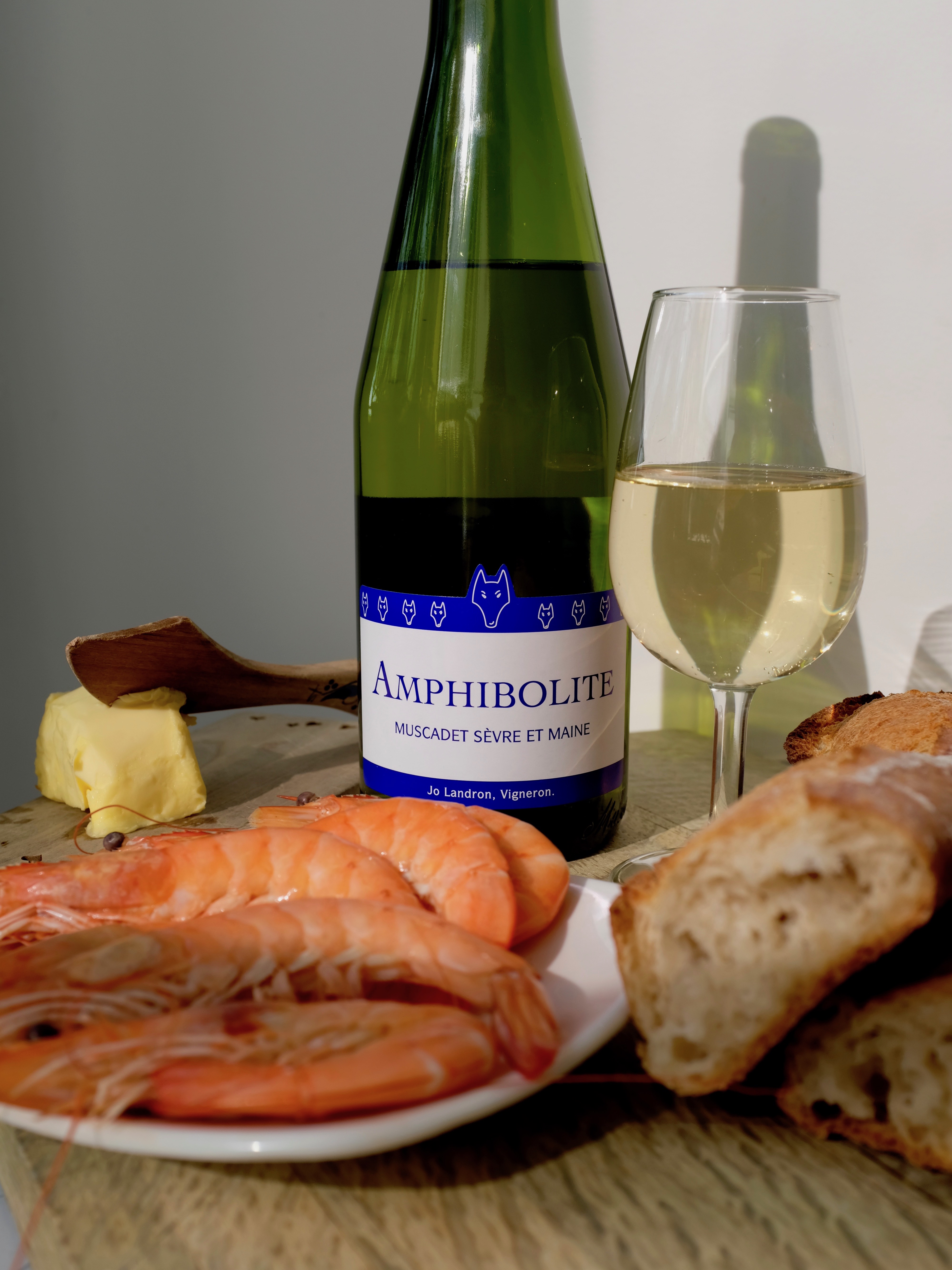
Landron’s flagship cuvée is undoubtedly Amphibolite – named for a type of rock produced through the metamorphism of gabbro. A palate of juicy citrus fruit, at once fresh and rich, with a lovely backbone of oceanic minerality… this is just good wine, easy-drinking, forget the off-the-charts acidity we’ve long associated with Muscadet.
When David Biraud, the 2002 best sommelier of France, landed his first head sommelier position in 2000 at Hotel Crillon’s Les Ambassadeurs, there wasn’t a single Muscadet on the wine list. Biraud changed that, by introducing the clientele of this famous palace hotel to Jo Landron’s Amphibolite. Today, as director of Sur Mesure par Thierry Marx, his winelist includes Amphibolite and 22 other Muscadets. As he told me during an interview, “Finally, Muscadet is showing everyone that it’s a wine region of great geological complexity – and that Melon, this understated, remarkably transparent grape, is perfectly adapted to transcribing terroir into minerality.”
To learn more about the renaissance of Muscadet, you can check out my article below from this winter in Centurion Magazine – “Muscadet Awakening“:
© Jeffrey T Iverson, 2024. Unauthorized use and/or duplication of this material without express and written permission from this blog’s author and/or owner is strictly prohibited. Excerpts and links may be used, provided that full and clear credit is given to Jeffrey T Iverson with appropriate and specific direction to the original content.
 Jeffrey T Iverson .com